
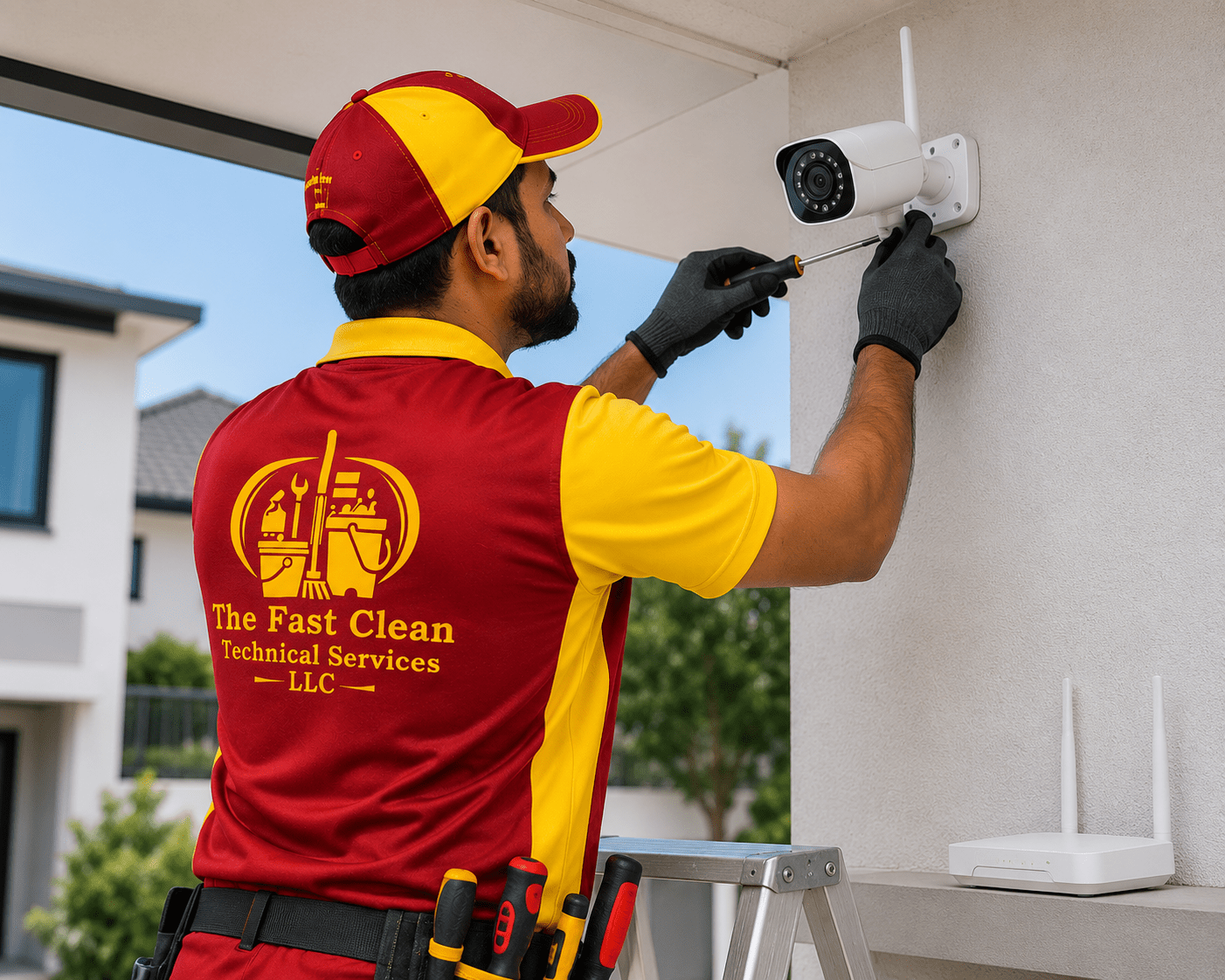
More families and small businesses are investing in CCTV installation Dubai wide to protect their homes, keep an eye on children or pets, and secure shops and offices. Modern cameras are affordable and easy to view on a phone, but the result depends on choosing the right cameras and placing them properly.
This guide explains camera types, WiFi versus wired systems, placement tips, storage options and the privacy points to keep in mind before installation.
Why Install CCTV in Your Home or Office?
- Peace of mind: check your home from your phone when you travel.
- Deliveries and visitors: see who is at the door before opening.
- Family and pets: keep an eye on children, elderly parents or pets.
- Deterrence: visible cameras discourage theft and vandalism.
- Evidence: recorded footage helps if an incident needs to be reported.
- Business control: monitor stock rooms, entrances and cash points.
Types of CCTV Cameras
| Camera type | Best for | Notes |
|---|---|---|
| Dome camera | Indoor ceilings, shops, offices | Discreet and hard to tamper with |
| Bullet camera | Gates, parking, outdoor walls | Long-range view, visible deterrent |
| WiFi / smart camera | Apartments, small rooms, nurseries | Easy setup, app control, two-way audio |
| PTZ camera | Large areas, warehouses | Pan, tilt and zoom remotely |
| Video doorbell | Front doors | See and talk to visitors |
For outdoor use in the UAE, choose cameras rated for heat and dust (look for a suitable IP rating) and with good night vision.
WiFi Cameras vs Wired CCTV Systems
WiFi cameras
WiFi cameras connect to your home network and store footage on a memory card or in the cloud. They are quick to install with minimal wiring, which makes them popular in apartments. Their weakness is reliance on a strong, stable WiFi signal.
Wired CCTV (DVR/NVR)
Wired systems connect cameras by cable to a recorder (DVR or NVR) with a hard drive. They are more reliable for larger properties and many cameras, and they keep recording even if WiFi drops. Installation takes more planning because cables need to be routed neatly and safely.
Where to Place CCTV Cameras
- Main entrance: capture faces clearly at head height, not just the tops of heads.
- Back or side doors: often less visible and a common entry point.
- Parking and driveway: cover vehicles and the gate.
- Ground-floor windows: especially in villas.
- Living areas or hallways: indoor cameras to monitor movement inside.
- For businesses: entrances, cash counters, storage rooms and loading areas.
Avoid pointing cameras directly at the sun or bright lights, which wash out the image, and avoid angles that record neighbours' homes or private spaces.
Storage and Remote Viewing
- Memory card: simple and low cost, but limited capacity.
- DVR/NVR hard drive: stores weeks of footage locally depending on size and settings.
- Cloud storage: footage is safe even if the camera is stolen, usually with a subscription.
Protect your system with strong passwords, two-factor login on the app and regular firmware updates so footage stays private.
Privacy and Rules to Keep in Mind
Dubai has specific regulations for security systems, especially for commercial and regulated premises, where installations often need to meet the requirements of the Security Industry Regulatory Agency (SIRA). For homes, the key principles are to record only your own property, avoid filming neighbours or common areas without permission, and use footage responsibly.
For a legal overview, see this article by Al Tamimi & Company on surveillance cameras in Dubai. Businesses should always confirm the current requirements before installation.
How Professional CCTV Installation Works
- Site visit to understand what you want to monitor.
- Camera selection and placement plan.
- Cable routing and power points (for wired systems).
- Mounting, alignment and focus of each camera.
- Recorder or app setup, storage settings and remote viewing on your phone.
- Handover with a quick demo of playback and alerts.
Book WiFi camera installation in Dubai, or if you live in Sharjah, our WiFi camera installation in Sharjah service. For other fittings during the same visit, see general electric work in Dubai.
Frequently Asked Questions
Do I need approval to install CCTV at home in Dubai?
Rules differ between private homes and commercial or regulated premises. Many businesses must use systems and installers that meet SIRA requirements. For homes, cameras should cover only your own property and respect neighbours' privacy. Check the latest requirements with the relevant authority or your building management.
WiFi camera or wired CCTV: which is better?
WiFi cameras are quick to install and ideal for apartments and small spaces. Wired systems are more stable, do not depend on WiFi signal strength and suit villas, warehouses and offices with many cameras.
How many cameras does a villa need?
It depends on the layout. A typical setup covers the main gate, front door, back entrance, parking and garden. A site check helps avoid blind spots and unnecessary cameras.
Can I watch my CCTV on my phone?
Yes. Most modern WiFi cameras and DVR/NVR systems include a mobile app for live view and playback, as long as the system is connected to the internet.
How long is CCTV footage stored?
Storage depends on the hard drive or cloud plan size, the number of cameras, resolution and whether recording is continuous or motion-based.
Can cameras be installed in a rented apartment?
Usually yes for indoor or door-facing cameras, but check your tenancy contract and building rules first, especially before drilling or covering common areas.
Planning CCTV or WiFi Camera Installation?
Tell us about your property and what you want to monitor, and The Fast Clean team will help you plan camera placement, wiring and setup in Dubai or Sharjah.
Get a Free QuoteCall +971 50 199 1956