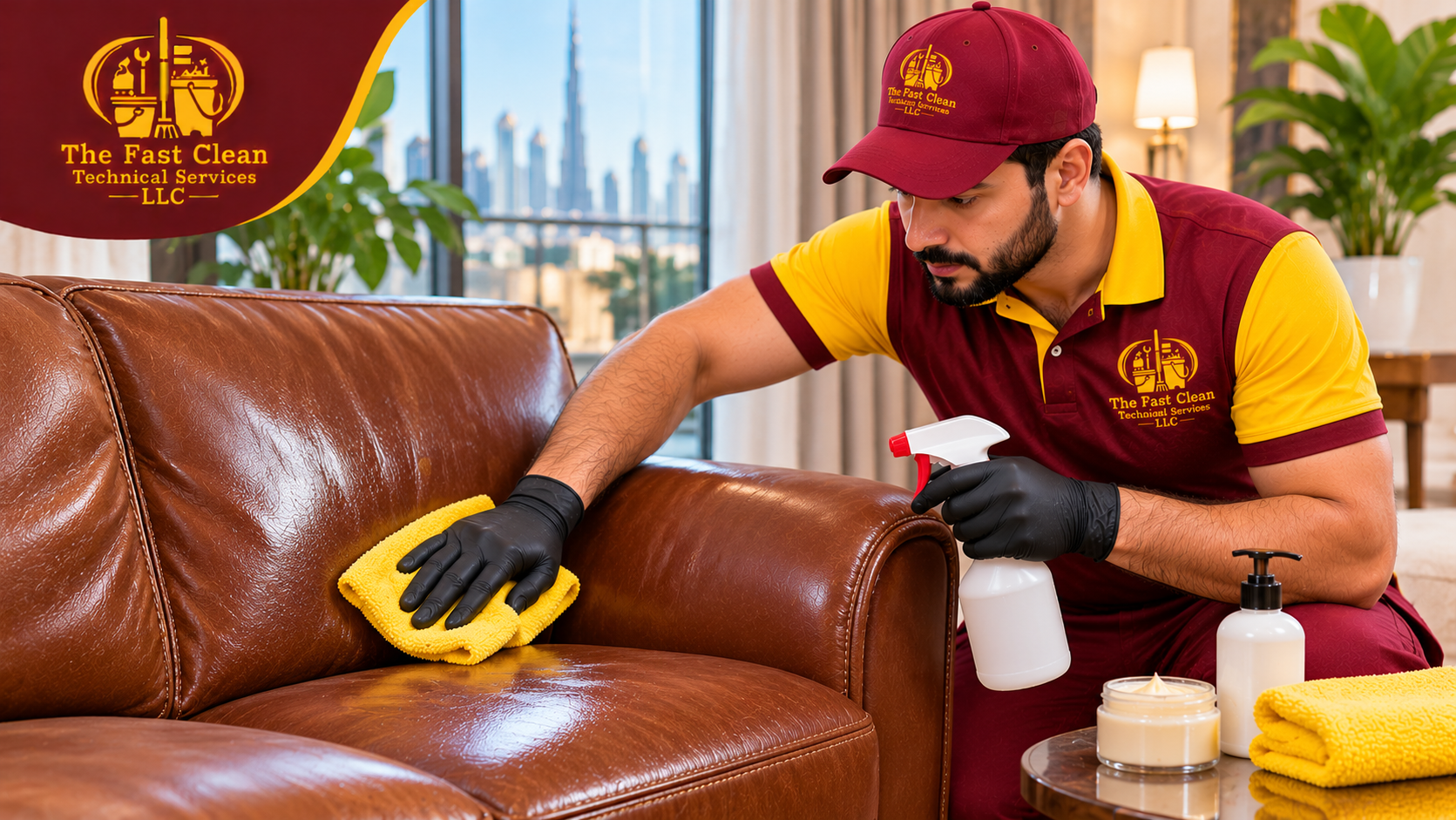
Leather sofas add elegance, comfort, and sophistication to homes, apartments, offices, and luxury villas. Whether you have a modern leather sofa, a classic leather lounge, or premium furniture in a Dubai villa, proper cleaning and conditioning can help maintain its appearance and longevity.
However, leather requires a different cleaning approach from fabric upholstery. Using excessive water, harsh chemicals, unsuitable conditioners, or abrasive cleaning tools may damage the leather finish, cause discoloration, or contribute to cracking and peeling.
Regular dust removal, prompt spill treatment, appropriate leather care products, and protection from direct sunlight can help maintain your sofa's appearance.
In this guide, we explain leather sofa cleaning and conditioning, the essential do's and don'ts, stain removal techniques, and practical leather furniture maintenance tips.
Why Leather Sofa Cleaning and Conditioning Matter
Leather is a durable material, but it is not maintenance-free. Daily use gradually introduces dust, body oils, sweat, food residue, and other contaminants onto the sofa surface.
Areas such as armrests, seat cushions, headrests, and frequently used sections may accumulate dirt more quickly.
Remove Dust and Everyday Dirt
Regular cleaning helps remove dust, debris, and everyday contaminants from leather surfaces.
Reduce Oil Buildup
Armrests, seats, and headrests can accumulate body oils, sweat, and dirt over time.
Maintain Appearance
Proper maintenance helps preserve the appearance and condition of leather furniture.
Prevent Cleaning Damage
Using appropriate products and methods helps reduce the risk of damage caused by unsuitable cleaning practices.
Different Types of Leather Sofas
Before cleaning or conditioning a leather sofa, identify its leather type and finish. Different materials have different cleaning requirements.
Finished or Protected Leather
Finished leather usually has a protective surface coating that makes it more resistant to everyday stains and moisture than uncoated leather.
It is commonly used in residential sofas and may be suitable for specialist leather cleaners and conditioners designed for protected leather.
Aniline Leather
Aniline leather has a natural appearance and little or no protective surface coating.
It is more absorbent and can be vulnerable to water marks, stains, fading, and discoloration.
Semi-Aniline Leather
Semi-aniline leather has some protective treatment while retaining a softer, more natural appearance.
It still requires appropriate cleaning products and careful maintenance.
Faux Leather
Faux leather is a synthetic material designed to resemble genuine leather.
Its care requirements can differ significantly from natural leather. Check the manufacturer's instructions before cleaning.
Suede and Nubuck
Suede and nubuck have textured surfaces that are different from smooth leather upholstery.
Standard leather cleaners and conditioners may not be suitable. These materials generally require specialized care.
Leather Sofa Cleaning Do's
1. Do Remove Dust Regularly
Use a clean, soft, dry microfiber cloth to remove dust from the sofa surface.
Pay attention to:
- Seat cushions
- Armrests
- Back cushions
- Seams
- Creases
- Areas beneath removable cushions
Dust and grit can accumulate in these areas and contribute to surface wear.
2. Do Use Suitable Leather Cleaning Products
Use a leather cleaner specifically formulated for the type and finish of your sofa.
Before applying any product, read the instructions carefully and confirm that it is suitable for your furniture.
3. Do Test Products on a Hidden Area
Always test the cleaner or conditioner on an inconspicuous area before treating the visible sofa surface.
Check for:
- Colour changes
- Discoloration
- Surface dullness
- Sticky residue
- Changes in texture
- Unwanted shine
Allow the test area to dry before proceeding.
4. Do Blot Spills Immediately
When drinks, food, or other liquids spill onto leather, act quickly.
Use a clean, dry, absorbent cloth and gently blot the liquid. Avoid rubbing, as friction may spread the spill or push it deeper into the material.
5. Do Use Soft Cleaning Tools
Use soft microfiber cloths, suitable sponges, or manufacturer-approved cleaning tools.
Avoid rough brushes, abrasive pads, and hard cleaning equipment that may scratch or damage the leather finish.
6. Do Clean High-Contact Areas Carefully
Armrests, seat cushions, headrests, and frequently used sections may collect body oils, sweat, and dirt.
These areas should receive regular gentle cleaning using appropriate leather-care products.
7. Do Condition Only When Appropriate
Leather conditioning can help maintain the suppleness of certain leather finishes.
However, not every leather sofa requires conditioning. Some manufacturers recommend specific protectors, while others advise against conditioners or treatments.
Choose a conditioner that is specifically suitable for your sofa's leather type and follow the manufacturer's instructions.
8. Do Protect Your Sofa from Sunlight
Position leather furniture away from prolonged direct sunlight where possible.
Sunlight can contribute to fading, uneven discoloration, and drying, depending on the leather finish. Curtains and blinds can help reduce exposure.
9. Do Allow Leather to Dry Naturally
After appropriate cleaning, allow the leather to dry naturally. Avoid hair dryers, heaters, direct sunlight, and other artificial heat sources.
10. Do Follow the Furniture Manufacturer's Instructions
Your sofa's manufacturer may provide specific cleaning, conditioning, and protection recommendations. These instructions should take priority over generic cleaning advice.
Leather Sofa Cleaning Don'ts
1. Don't Use Bleach
Bleach can damage leather finishes, remove colour, and cause discoloration. Avoid bleach-based products completely unless the manufacturer specifically provides a safe procedure for the particular material.
2. Don't Use Household Detergents
Washing-up liquid, laundry detergent, multipurpose cleaners, and other household cleaning products may not be suitable for leather. Some contain ingredients that can affect protective coatings or leave residue.
3. Don't Use Excessive Water
Leather should not be soaked or saturated. Excess moisture may cause water marks, discoloration, stiffness, or damage depending on the leather type.
4. Don't Scrub Aggressively
Hard scrubbing may damage the leather surface, alter its finish, or make stains worse. Use gentle motions and appropriate products.
5. Don't Apply Random Oils or Polishes
Cooking oils, olive oil, petroleum-based products, furniture polish, shoe polish, and unsuitable waxes may leave residue or affect the leather finish. Use only products recommended for the particular sofa.
6. Don't Use Alcohol or Solvents
Alcohol-based cleaners, nail polish remover, strong solvents, and similar chemicals can damage leather coatings and pigments. Avoid using them for stain removal.
7. Don't Use Baby Wipes Without Approval
Baby wipes and general-purpose cleaning wipes may contain ingredients unsuitable for leather. Their use may cause residue, fading, or finish damage.
8. Don't Use Steam Cleaners Without Approval
Steam introduces heat and moisture that may damage leather, surface coatings, adhesives, or furniture construction. Use steam only when the furniture manufacturer specifically approves it.
9. Don't Leave Spills Untreated
Liquids, food, oils, and coloured substances can leave stains if they remain on the leather. Blot spills as soon as possible and use an appropriate cleaning method.
10. Don't Over-Condition Your Sofa
Excessive conditioner may create greasy buildup, sticky residue, or unwanted changes in appearance. Conditioning frequency depends on leather type, usage, manufacturer recommendations, and environmental conditions.
How to Clean a Leather Sofa Step by Step
Follow these steps for routine maintenance, provided they are appropriate for your particular leather finish.
Step 1: Check the Leather Type
Identify whether the sofa is finished leather, aniline, semi-aniline, faux leather, suede, or nubuck. Check the care label or manufacturer instructions.
Step 2: Remove Dust and Loose Dirt
Use a soft microfiber cloth or an appropriate soft-brush vacuum attachment. Remove dirt from cushions, seams, folds, and creases.
Step 3: Prepare a Suitable Leather Cleaner
Select a cleaner specifically formulated for the leather type. Avoid generic household cleaning products.
Step 4: Test the Cleaner
Apply the product to a hidden area according to the manufacturer's instructions. Allow the test area to dry and check for changes in colour, texture, or finish.
Step 5: Clean Gently
Apply the cleaner using the recommended cloth, sponge, or applicator. Work in small sections and use gentle movements without excessive rubbing.
Step 6: Remove Product Residue
Follow the product instructions for removing excess cleaner. Do not leave excessive moisture or product residue on the leather.
Step 7: Allow Natural Drying
Let the sofa dry naturally in a well-ventilated room. Avoid direct sunlight and artificial heat.
Step 8: Apply Conditioner if Recommended
If the leather type requires conditioning, apply an appropriate conditioner according to the product instructions. Do not condition leather that the manufacturer advises against treating.
How to Condition a Leather Sofa Properly
Conditioning is intended to maintain the characteristics of certain leather finishes, but the correct product and frequency are important.
1. Clean the Leather First
Conditioner should not be applied over heavy dust, dirt, or residue. Clean the surface using a suitable leather cleaner and allow it to dry according to the instructions.
2. Choose the Correct Conditioner
Use a conditioner designed for your leather type. Avoid products intended for car interiors, shoes, saddles, or other materials unless the product specifically states that it is suitable for your furniture.
3. Apply a Small Amount
Use the recommended applicator and apply a thin, even layer. Avoid saturating the leather or applying excessive product.
4. Work in Small Sections
Follow the product directions to distribute the conditioner evenly. Pay particular attention to areas that experience regular use, if the product instructions allow.
5. Allow the Conditioner to Absorb
Allow the product to work for the recommended time. Do not force drying with heat.
6. Remove Excess Product
If instructed, gently wipe away excess conditioner using a clean, soft cloth. Avoid leaving greasy or sticky residue.
How to Remove Common Leather Sofa Stains
Leather stains should be treated according to their type and the leather finish.
Water Spills
Blot immediately with a clean, dry cloth. Avoid rubbing and do not saturate the leather with additional water.
Coffee and Tea Stains
Absorb the spill as quickly as possible. Use a leather-specific cleaner only if it is suitable for your sofa's finish.
Food Stains
Remove loose food carefully without scraping the leather. Treat remaining residue using the appropriate cleaning product.
Grease and Oil Stains
Avoid applying household degreasers or solvents. Grease stains may require specialist leather cleaning, particularly on absorbent leather.
Ink Stains
Ink can be difficult to remove and may penetrate leather finishes. Avoid alcohol, nail polish remover, and aggressive rubbing. Professional assessment may be appropriate.
Dye Transfer from Clothing
Dark clothing, denim, and coloured fabrics may transfer dye onto lighter leather sofas. Use a suitable leather cleaning product and avoid abrasive scrubbing.
How to Prevent Leather Sofa Cracking and Fading
Keep Furniture Away from Direct Sunlight
Use curtains or blinds to reduce prolonged exposure to sunlight.
Avoid Direct Heat Sources
Do not place leather sofas too close to heaters, radiators, fireplaces, or heat-producing equipment.
Clean Dust Regularly
Dust and dirt can accumulate on the surface and in seams. Regular gentle cleaning helps maintain the sofa.
Prevent Sharp Objects from Causing Damage
Keys, belt buckles, pet claws, sharp accessories, and rough objects can scratch or puncture leather.
Treat Spills Immediately
Prompt spill treatment reduces the risk of stains settling into the leather.
Maintain Suitable Indoor Conditions
Keep indoor conditions reasonably stable and avoid excessive dryness or moisture where possible.
Leather Sofa Care Routine
Weekly Maintenance
- Remove surface dust with a soft cloth.
- Clean dust from seams and creases.
- Inspect armrests and seat cushions.
- Remove loose debris from beneath cushions.
- Check for spills or visible stains.
Monthly Maintenance
- Inspect frequently used areas for dirt buildup.
- Check for scratches, discoloration, and surface changes.
- Inspect the sofa's condition and care requirements.
- Clean small marks using an approved product when necessary.
Periodic Maintenance
- Perform a suitable deeper clean when needed.
- Apply conditioner or protector only if recommended.
- Check the manufacturer's care instructions.
- Consider professional leather cleaning if stains or buildup cannot be safely removed.
The appropriate schedule depends on the leather type, household activity, sofa usage, and product recommendations.
When Should You Hire Professional Leather Sofa Cleaning Services?
Professional cleaning may be beneficial when:
- Your sofa has stubborn stains.
- Leather has become dull or heavily soiled.
- There is significant body-oil buildup.
- The sofa has visible dye transfer.
- You notice sticky residue from previous cleaning.
- The leather has uneven discoloration.
- You are unsure which cleaning products are safe.
- You have delicate aniline or specialist leather.
- You want to clean luxury furniture without risking damage.
A professional should assess the leather type, surface finish, condition, and stains before choosing a treatment.
Cleaning, conditioning, protecting, recolouring, and leather restoration are different treatments and should not be confused.
Professional Leather Sofa Cleaning in Dubai
Leather sofas are valuable furniture pieces in Dubai homes, apartments, offices, and luxury villas.
Proper cleaning and maintenance can help preserve their appearance, comfort, and condition.
The Fast Clean Technical Services LLC provides professional cleaning solutions for residential and commercial properties.
If your leather sofa requires professional attention, suitable cleaning methods can help remove accumulated dirt and improve the appearance of your furniture while minimizing the risk of damage.
Whether you need regular furniture cleaning, assistance with stubborn stains, or care for frequently used leather seating, the correct cleaning approach is essential.
Frequently Asked Questions
How often should I clean my leather sofa?
Light dust removal should generally be performed weekly. Deeper cleaning depends on the leather type, usage, and manufacturer's recommendations.
How often should I condition a leather sofa?
Conditioning frequency depends on the leather finish and manufacturer instructions. Some sofas may benefit from periodic conditioning, while others should not be conditioned at all.
Can I use water to clean a leather sofa?
It depends on the leather type. Some protected or synthetic leathers may tolerate a lightly damp cloth, while absorbent natural leathers may be sensitive to water and water marks.
Can I use vinegar on a leather sofa?
Vinegar is not a universally safe leather cleaner. It may affect the finish, colour, or surface depending on the leather type. Use a suitable leather cleaning product instead.
Can I use baby wipes on leather?
Baby wipes are not recommended unless the furniture manufacturer specifically approves them. They may contain ingredients that affect leather finishes or leave residue.
What causes leather sofas to crack?
Drying, heat, sunlight, wear, unsuitable cleaning products, and inadequate maintenance may contribute to deterioration and cracking.
Is leather conditioner necessary?
Not for every leather sofa. Some finishes benefit from appropriate conditioning, while other manufacturers recommend cleaning only or specific protection products.
Can professional cleaning remove ink stains from leather?
Some ink stains may be treatable, but results depend on the leather type, stain, and how deeply the ink has penetrated. Professional assessment is recommended for difficult stains.
Book Professional Sofa Cleaning in Dubai
Leather furniture deserves proper care to maintain its beauty, comfort, and longevity.
Regular dust removal, correct cleaning products, prompt spill treatment, and suitable protection can help keep your leather sofa in excellent condition.
If your leather sofa needs professional cleaning, The Fast Clean Technical Services LLC can help with residential cleaning solutions in Dubai.
Keep your leather furniture clean, protected, and looking its best. Contact The Fast Clean today.
Contact The Fast Clean