Mold and mildew are common bathroom problems in the UAE, especially in areas exposed to high humidity, frequent showers, poor ventilation, and air conditioning. Dark spots around bathroom grout, shower silicone, ceilings, corners, and walls can make a bathroom look dirty and poorly maintained.
The UAE's humid climate, combined with cooled indoor surfaces, can create conditions where moisture accumulates and mold starts growing. Regular bathroom cleaning helps, but cleaning alone may not solve the problem if moisture continues to build up.
In this guide, we explain why mold and mildew grow in UAE bathrooms, where they commonly appear, how to remove them safely, and how to prevent them from returning.
Why Mold & Mildew Grow in UAE Bathrooms
Mold requires moisture and suitable conditions to grow. Bathrooms naturally produce moisture through showers, hot water, sinks, and wet surfaces.
In UAE homes, several additional factors can contribute to mold growth.
1. High Humidity
Humidity can remain high in the UAE, particularly during humid weather. Moist air can enter buildings or accumulate indoors, increasing the likelihood of condensation on cooler surfaces.
When moisture remains on bathroom walls, ceilings, grout, or silicone for extended periods, mold may develop.
2. Poor Bathroom Ventilation
Bathrooms without effective exhaust fans or adequate ventilation can trap steam and moisture.
After showers, humid air may remain inside the room, especially when doors and windows remain closed.
3. Air Conditioning and Condensation
Air conditioning keeps UAE homes comfortable, but cooled surfaces can sometimes create condensation when humid air comes into contact with them.
Common areas include AC vents, cold pipes, exterior walls, window corners, and areas behind wardrobes.
4. Water Leaks
Leaking pipes, shower connections, damaged waterproofing, plumbing fixtures, and ceiling leaks can create persistent dampness.
Even small leaks may remain unnoticed behind tiles, cabinets, or walls until visible mold or a musty smell appears.
5. Wet Grout and Silicone
Bathroom grout and silicone joints around showers, bathtubs, sinks, and other fixtures can accumulate moisture, soap residue, and dirt.
If these areas remain wet or their sealant becomes damaged, mold may develop and become difficult to remove completely.
Where Mold Commonly Appears in UAE Bathrooms
Mold and mildew often develop in areas where moisture collects and airflow is limited.
Shower Grout and Tile Joints
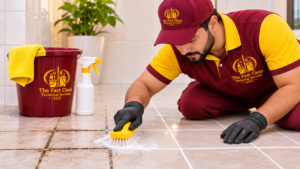
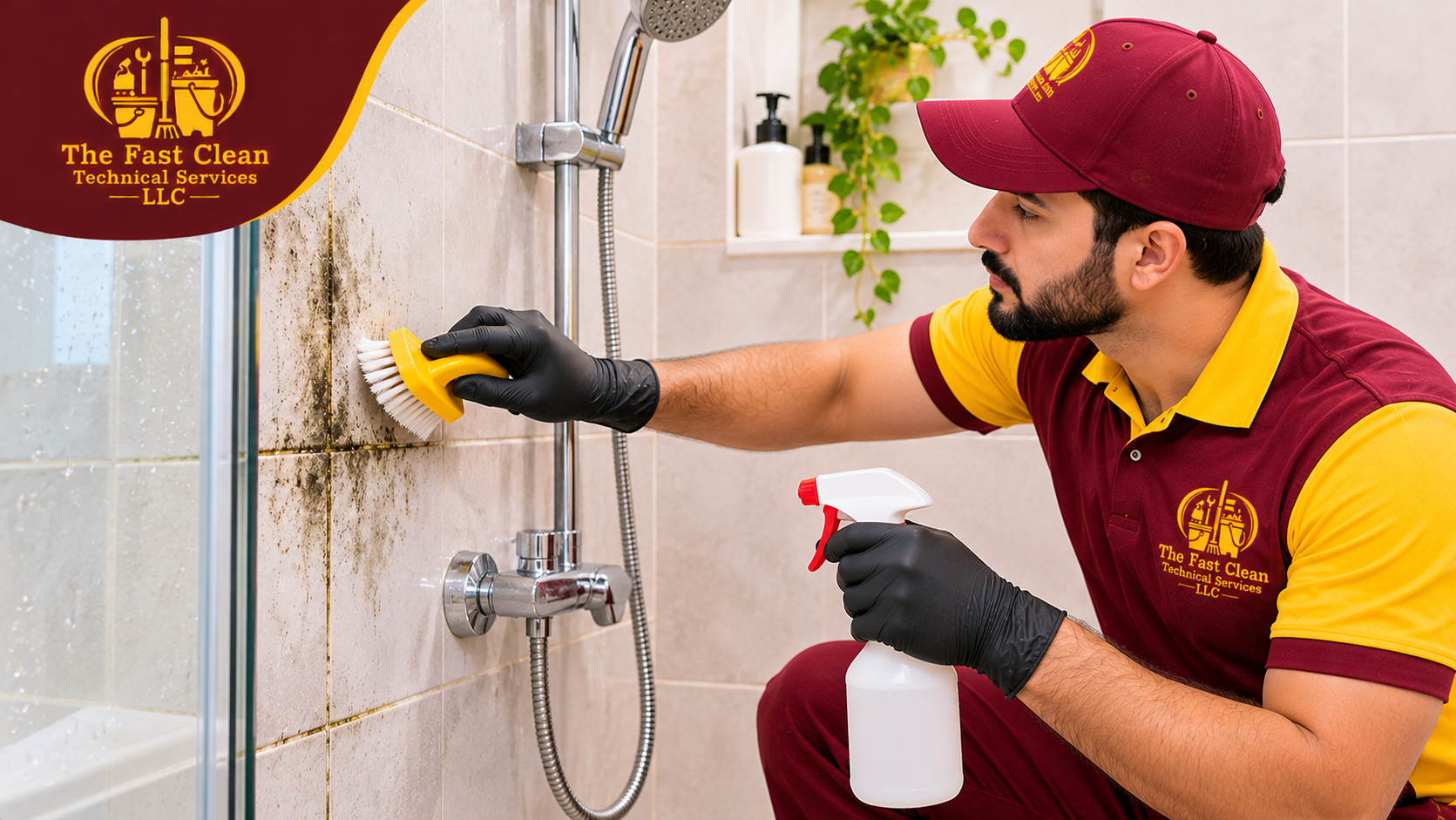
Grout between bathroom tiles can become dark due to moisture, soap residue, dirt, and mold growth.
Shower corners and floor joints are particularly vulnerable because they frequently remain wet.
Silicone Around Bathtubs and Showers
Silicone sealant may develop black spots along shower trays, bathtubs, sinks, and wall joints.
If mold penetrates beneath the silicone, surface cleaning may not completely remove it.
Bathroom Ceilings
Mold on bathroom ceilings may develop because warm, humid air rises and moisture accumulates on cooler surfaces.
Poor ventilation, condensation, roof leaks, plumbing leaks, or AC-related problems may contribute.
Corners and Behind Fixtures
Bathroom corners, areas behind toilets, under sinks, and around cabinets may have limited airflow.
Moisture can remain trapped in these areas, creating conditions that encourage mold growth.
Around AC Vents
Dark spots around AC vents may be associated with condensation, insulation problems, airflow issues, or other moisture-related conditions.
The source should be investigated rather than simply painting over the affected area.
Signs of Mold and Mildew in Your Bathroom
Mold is not always immediately visible. Some signs may indicate a moisture problem before significant growth appears.
- Black, green, grey, or brown spots
- Musty or damp odors
- Dark grout lines
- Moldy silicone around showers
- Peeling or bubbling paint
- Damp bathroom ceilings
- Condensation on walls or surfaces
- Repeated stains after cleaning
- Moisture around pipes and fixtures
If mold repeatedly returns in the same location, there may be an underlying moisture problem that needs attention.
How to Remove Mold from Bathroom Tiles and Grout
Small areas of mold on suitable hard surfaces may sometimes be cleaned using appropriate household cleaning methods.
Step 1: Identify the Affected Area
Inspect the bathroom to identify visible mold, damp surfaces, damaged grout, and possible leaks.
Determine whether the affected material is a hard surface or a porous material such as drywall, ceiling board, or other absorbent material.
Step 2: Protect Yourself
Wear suitable protective equipment, including gloves and eye protection. Ensure the bathroom is adequately ventilated.
Avoid disturbing mold unnecessarily, particularly when the affected area is extensive.
Step 3: Choose an Appropriate Cleaner
Use a cleaning product suitable for the affected surface. Follow the manufacturer's instructions regarding application, contact time, rinsing, and safety precautions.
Step 4: Clean the Affected Surface
For suitable hard surfaces, gently clean the affected area using an appropriate cleaner and cloth or brush.
Avoid aggressive scrubbing that may damage grout, silicone, paint, or tile finishes.
Step 5: Rinse and Dry
Remove cleaning residue as directed by the product instructions. Dry the surface thoroughly using a clean towel or suitable drying method.
Step 6: Address the Moisture Source
Cleaning is only part of the solution.
If mold is caused by condensation, leaking pipes, poor ventilation, or damaged sealant, the underlying issue should also be corrected. Without moisture control, mold may return.
How to Remove Mold from Bathroom Silicone
Mold on bathroom silicone is particularly frustrating because black spots may remain even after repeated cleaning.
Surface Mold
If mold is only present on the surface, a suitable silicone-safe cleaning product may help improve its appearance.
Follow the product instructions and avoid harsh methods that may damage the sealant.
Mold Inside Silicone
If mold has penetrated the silicone or the sealant is cracked, deteriorating, or repeatedly affected, cleaning may not be sufficient.
In such situations, the affected silicone may need to be removed, the area dried properly, and new suitable sanitary sealant installed.
Replacing silicone without addressing persistent moisture or ventilation problems may lead to recurring mold.
How to Prevent Mold & Mildew in UAE Bathrooms
Prevention is usually more effective than repeatedly cleaning visible mold.
1. Use Your Bathroom Exhaust Fan
Run the exhaust fan during showers and after bathing to help remove humid air.
Make sure the fan works properly and is suitable for the bathroom.
2. Dry Wet Surfaces
After showers, use a squeegee or towel to remove excess water from tiles, glass, and other suitable surfaces.
Pay attention to grout lines, corners, and shower joints.
3. Keep Bathroom Doors Open When Appropriate
After bathing, allow moisture to escape when practical and when the bathroom layout permits suitable airflow.
Avoid leaving the room completely sealed while it remains damp.
4. Repair Leaks Quickly
Inspect taps, shower connections, plumbing fixtures, pipes, and ceiling areas.
Repair leaks promptly before moisture spreads into walls, floors, or cabinets.
5. Monitor Indoor Humidity
A hygrometer can help monitor indoor humidity. Keeping indoor relative humidity below 60% where practical may help reduce mold risk.
If humidity remains high, consider improving ventilation, AC operation, or using an appropriately sized dehumidifier.
6. Keep Furniture Away from Damp Walls
Avoid placing furniture tightly against walls where condensation or poor airflow may occur.
Allow enough space for air circulation, particularly around wardrobes and cabinets near exterior walls.
7. Maintain AC Systems
Ensure AC systems, drain lines, and related components are properly maintained.
AC drainage issues, condensation, and insulation problems can contribute to moisture around bathroom ceilings and nearby areas.
8. Inspect Grout and Silicone Regularly
Check grout, silicone joints, and bathroom seals for cracks, gaps, and deterioration.
Repair damaged areas before moisture penetrates behind surfaces.
Common Mistakes When Dealing with Bathroom Mold
Painting Over Mold
Painting over mold without cleaning it and addressing moisture does not solve the underlying problem.
Cleaning Without Fixing Leaks
Repeatedly cleaning a moldy wall while ignoring a leak can allow the problem to continue.
Mixing Cleaning Chemicals
Never mix cleaning products. Dangerous chemical reactions and fumes may occur.
Ignoring Bathroom Ventilation
A bathroom that remains humid for long periods is more likely to experience recurring moisture problems.
Using Excessive Water
Excess water during cleaning may increase moisture in grout, joints, and nearby porous materials.
Ignoring Mold Behind Fixtures
Visible mold may not represent the full extent of the moisture problem. Further inspection may be necessary.
When Should You Hire Professional Mold Removal Services?
Professional assessment and remediation may be appropriate when:
- Mold covers a large area.
- Mold repeatedly returns after cleaning.
- Mold appears on ceilings, walls, or porous materials.
- There is a persistent musty smell.
- A water leak or structural moisture problem is suspected.
- Mold is present behind cabinets, fixtures, or walls.
- The affected area cannot be cleaned safely.
- The source of moisture is unknown.
Professional mold removal involves more than cleaning visible stains. The affected area may need assessment, appropriate containment, removal of contaminated materials, cleaning, drying, and correction of the moisture source.
The appropriate treatment depends on the extent of contamination and the affected material.
Professional Mold & Mildew Cleaning in Dubai
Mold and mildew can affect the appearance and cleanliness of bathrooms, villas, apartments, and commercial properties.
The Fast Clean Technical Services LLC provides professional cleaning solutions for residential and commercial properties in Dubai.
If your bathroom has moldy grout, dark silicone, stubborn mildew stains, or persistent moisture-related cleaning problems, professional cleaning may help restore affected surfaces.
For recurring mold problems, identifying and addressing the moisture source is essential.
Whether you need bathroom deep cleaning, grout cleaning, mold treatment, or general cleaning services, The Fast Clean can help you maintain a cleaner and fresher indoor environment.
Frequently Asked Questions
Why is mold so common in UAE bathrooms?
Humidity, shower steam, poor ventilation, condensation, water leaks, and damp grout can contribute to mold growth in UAE bathrooms.
How do I remove black mold from bathroom grout?
Use a suitable grout cleaner according to its instructions, gently clean the affected grout, rinse as directed, and dry the surface thoroughly. If the mold is extensive or repeatedly returns, professional assessment may be needed.
Why does bathroom mold keep coming back?
Mold may return when the underlying moisture problem remains. Poor ventilation, leaks, condensation, damp materials, or damaged silicone may continue providing conditions for growth.
Can bathroom mold be removed permanently?
Mold can be removed from affected surfaces, but preventing recurrence requires controlling moisture and addressing the source of the problem.
Is black mold on bathroom silicone dangerous?
Black discoloration may be mold or another type of staining. Persistent mold growth should be addressed appropriately, especially if it covers a large area or is associated with moisture problems.
Does an exhaust fan help prevent bathroom mold?
Yes. A properly functioning exhaust fan can help remove humid air from the bathroom and reduce moisture buildup.
Should I use bleach to remove bathroom mold?
Some products contain bleach and may be suitable for specific surfaces, but not every material can tolerate it. Follow the manufacturer's instructions, ventilate the area, and never mix bleach with other cleaning products.
When should I call professional mold removal services?
Contact professionals if mold is extensive, repeatedly returns, affects porous materials, is associated with leaks, or cannot be safely cleaned.
Book Bathroom Cleaning Services in Dubai
Mold and mildew can make bathrooms look dirty and poorly maintained, even when other areas are regularly cleaned.
Proper ventilation, moisture control, regular maintenance, and suitable cleaning methods can help keep bathroom surfaces cleaner and reduce recurring mold problems.
If your bathroom needs professional cleaning, The Fast Clean Technical Services LLC can assist with bathroom cleaning, deep cleaning, grout cleaning, and related services.
Keep your bathroom cleaner, fresher, and better maintained. Contact The Fast Clean today.
Contact The Fast Clean