
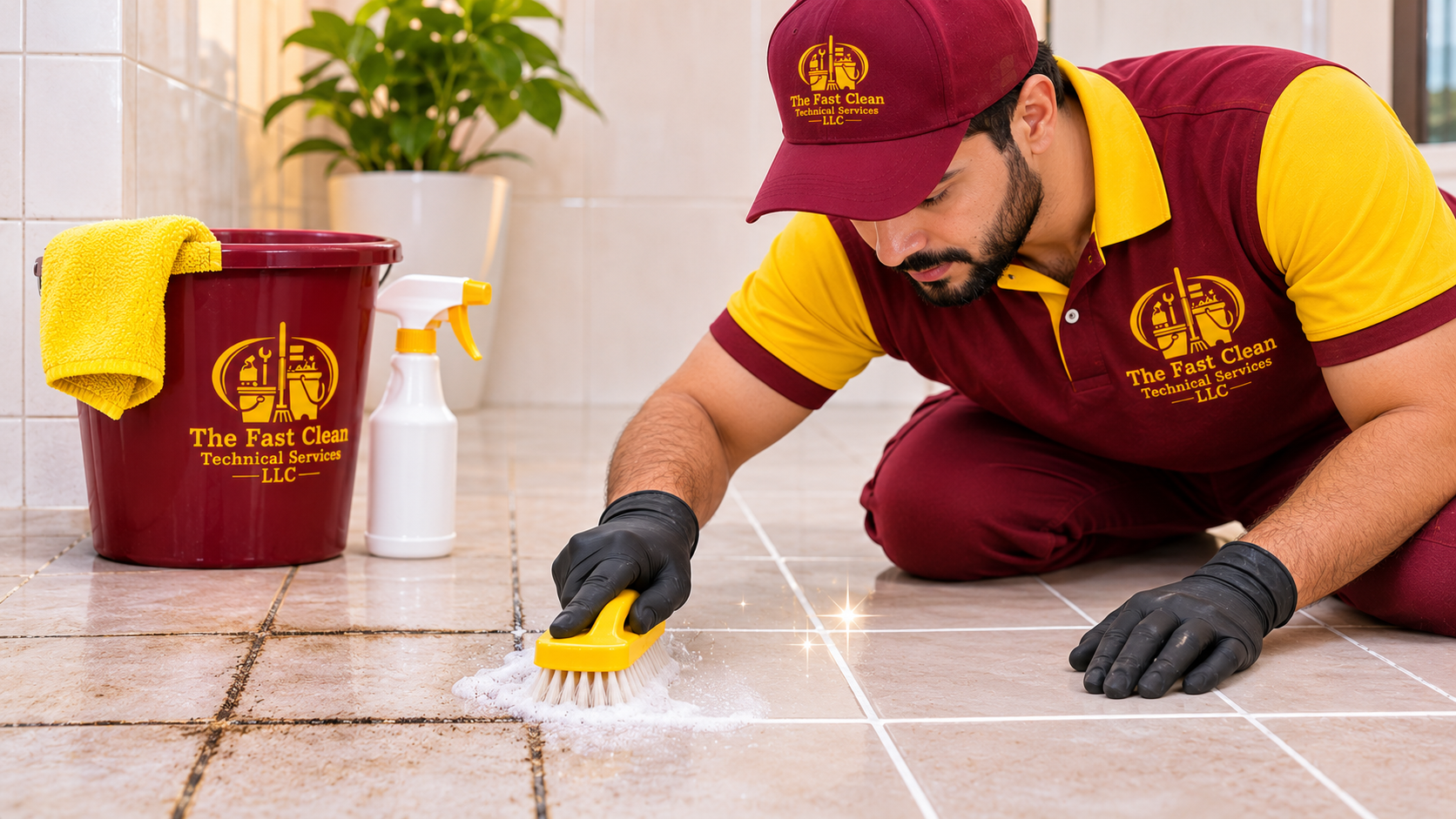
Clean tiles can make a bathroom, kitchen, or living space look fresh and well-maintained. However, even when tiles are cleaned regularly, grout lines between them can become dark, dirty, stained, and discolored over time.
Tile grout is porous in many installations, which means it can absorb moisture, dirt, soap residue, grease, and other contaminants. This is why grout may gradually lose its original white appearance.
Learning how to clean tile grout properly can help restore its appearance, improve the cleanliness of tiled surfaces, and maintain your home's overall hygiene.
In this guide, we explain how to clean tile grout, remove black stains, make white grout look brighter again, prevent discoloration, and know when professional grout cleaning is the better option.
Why Does Tile Grout Become Dirty and Black?
Grout lines can become discolored for several reasons. The exact cause depends on the location, ventilation, cleaning habits, and type of grout installed.
Dirt and Dust
Dust and dirt can accumulate inside grout lines, especially on tiled floors and high-traffic areas.
Soap Residue
Soap, shampoo, and body products may leave residue on bathroom grout and contribute to discoloration.
Grease and Food Spills
Kitchen grout can absorb grease, cooking residue, and food spills that may become difficult to remove.
Moisture and Humidity
Damp conditions can contribute to mildew, mold, and dark stains in bathrooms and other wet areas.
Hard-Water Deposits
Mineral deposits from water may affect the appearance of tiled surfaces and grout lines.
Foot Traffic
Dirt carried by shoes can gradually accumulate in floor grout, especially around entrances and frequently used areas.
Understanding the cause of grout discoloration is important because different stains may require different cleaning methods.
What You Need to Clean Tile Grout
Before starting grout cleaning, prepare suitable cleaning supplies.
- Grout-safe cleaning solution
- Soft-bristle brush or grout brush
- Microfiber cloths
- Warm water
- Spray bottle, if suitable for your cleaner
- Protective gloves
- Clean sponge
- Dry towel
- Suitable ventilation
For stubborn stains, a grout-compatible stain remover may be required. Always check the manufacturer's instructions and test the cleaning product on a small, inconspicuous area before using it across the entire surface.
How to Clean Tile Grout Step by Step
Step 1: Remove Loose Dirt and Debris
Start by removing loose dirt, dust, hair, and debris from the tiled surface.
For floors, vacuum or sweep the area carefully. For walls, wipe the surface using a clean microfiber cloth.
Removing loose debris first prevents dirt from spreading during the grout cleaning process.
Step 2: Identify the Type of Grout and Tile
Before applying any cleaning product, identify the tile material and grout type if possible.
- Ceramic tiles may tolerate certain cleaning products.
- Porcelain tiles have different maintenance requirements depending on their finish.
- Natural stone such as marble or limestone may be damaged by acidic cleaners.
- Cement-based grout may be sensitive to harsh chemicals and acidic products.
Always follow the manufacturer's care instructions and avoid using an unsuitable cleaner.
Step 3: Apply a Grout Cleaning Solution
Apply an appropriate grout cleaner to the dirty grout lines according to the product's instructions.
Allow the cleaning solution to work for the recommended time. Avoid using excessive product or allowing the cleaner to dry on the surface unless the product instructions specifically allow it.
Step 4: Scrub the Grout Lines
Use a soft-bristle grout brush to gently scrub the grout lines. Work in small sections and pay attention to heavily stained areas.
Avoid excessively aggressive scrubbing because it may damage grout, especially if the grout is already cracked, weak, or deteriorating.
Step 5: Rinse the Surface Thoroughly
After scrubbing, remove the cleaning residue using clean water and a suitable sponge or microfiber cloth.
Rinsing is important because leftover cleaning products can attract dirt or leave a residue on the tiles.
Change the rinse water frequently when cleaning larger areas.
Step 6: Dry the Tiles and Grout
Use a clean, dry towel or microfiber cloth to remove excess moisture. Allow the surface to dry completely.
Proper drying is particularly important in bathrooms and other areas where moisture can remain trapped for extended periods.
Step 7: Repeat for Stubborn Grout Stains
Some stains may not disappear after one cleaning.
If the cleaning product allows repeat applications, follow its instructions and repeat the process where necessary.
If grout remains dark or discolored after cleaning, the issue may involve deep staining, mold, grout deterioration, or permanent discoloration.
Professional cleaning, grout repair, or grout recoloring may be more suitable in such cases.
How to Make White Tile Grout White Again
White grout can become grey, yellow, brown, or black over time. Restoring its appearance depends on the cause and severity of the discoloration.
Remove Surface Dirt
Begin by removing loose dirt and dust. Surface dirt can make grout appear darker than it actually is.
Use a Grout-Safe Cleaner
Choose a cleaning product designed for your tile and grout type. Follow the product instructions carefully.
Scrub Gently
Use a soft grout brush to clean the affected lines without damaging the grout.
Rinse Thoroughly
Remove all cleaning residues with clean water and a suitable cloth.
Grout may appear darker while it is wet. Allow it to dry completely before assessing the final result.
If the grout remains discolored after drying, it may require specialized stain treatment or grout color restoration.
How to Clean Black Grout Stains
Black stains on grout may be caused by accumulated dirt, mildew, mold, or other contaminants. The appropriate cleaning method depends on the cause.
Black Dirt and Surface Stains
Use a suitable grout cleaner and soft brush to remove accumulated dirt.
Mold or Mildew
If black discoloration appears in damp bathrooms, around showers, or near poorly ventilated areas, mold or mildew may be a possible cause.
Use an appropriate product specifically designed for the affected surface and follow its safety instructions.
Keep the area ventilated and avoid mixing cleaning chemicals.
Deeply Embedded Stains
Some discoloration may penetrate grout and cannot be completely removed using routine cleaning. Professional stain treatment or grout restoration may help improve its appearance.
How to Clean Bathroom Tile Grout
Bathroom grout is frequently exposed to moisture, soap, shampoo, body oils, and hard-water deposits.
- Remove soap bottles and bathroom accessories.
- Rinse the tiled surface if appropriate.
- Apply a suitable bathroom grout cleaner.
- Allow it to work according to the instructions.
- Scrub the grout lines gently.
- Rinse thoroughly.
- Dry the surface.
- Improve ventilation to help prevent future moisture buildup.
Pay particular attention to grout around showers, bathtubs, floor corners, and areas where water frequently accumulates.
How to Clean Kitchen Tile Grout
Kitchen grout may become dirty due to grease, food particles, spills, and daily cooking activities.
- Remove loose crumbs and debris.
- Select a suitable grout and tile cleaner.
- Apply the cleaning product according to its instructions.
- Gently scrub the grout lines.
- Rinse away cleaning residue.
- Dry the surface with a clean cloth.
For kitchen floors, regular sweeping and prompt spill cleanup can help prevent stains from becoming deeply embedded.
Can Baking Soda Clean Tile Grout?
Baking soda is commonly used in household cleaning, but its suitability depends on the tile and grout material and the cleaning situation.
Some people use baking soda as a mild abrasive for surface dirt. However, it may not be effective against deep stains, mold, or severe discoloration.
- Check your tile and grout manufacturer's instructions.
- Test the method on a small hidden area.
- Avoid abrasive scrubbing on delicate surfaces.
- Do not combine homemade mixtures with other cleaning chemicals.
For stubborn grout stains, a dedicated grout cleaning product may provide more predictable results.
Can Vinegar Be Used to Clean Grout?
Vinegar is acidic and may damage cement-based grout, natural stone, or certain tile finishes over repeated use.
Avoid using vinegar on marble, limestone, travertine, and other acid-sensitive surfaces.
If you are unsure about your tile or grout material, choose a cleaner specifically approved for the surface instead of experimenting with acidic household products.
How to Prevent Tile Grout from Becoming Dirty Again
Clean Tiles Regularly
Remove dust, dirt, and spills before they accumulate.
Dry Wet Areas
Use a towel or squeegee where appropriate to remove excess water from bathroom surfaces.
Improve Bathroom Ventilation
Use exhaust fans or ventilation to reduce moisture buildup.
Clean Spills Immediately
Kitchen spills, oils, and other substances can stain grout if left untreated.
Use Suitable Cleaning Products
Avoid harsh or unsuitable chemicals that may damage grout or tile finishes.
Consider Grout Sealing
Some grout types may benefit from an appropriate grout sealer after cleaning and drying.
A suitable sealer can help reduce the absorption of certain contaminants, but it does not eliminate the need for regular maintenance.
Common Grout Cleaning Mistakes to Avoid
Using Harsh Chemicals
Strong chemicals may damage grout, tile finishes, or nearby surfaces.
Mixing Cleaning Products
Never mix cleaning chemicals. Certain combinations can produce dangerous fumes or reactions.
Using Excessive Force
Aggressive scrubbing can weaken grout or damage tile finishes.
Ignoring Moisture Problems
Cleaning mold or mildew without addressing persistent moisture may result in recurring discoloration.
Using Acidic Cleaners on Natural Stone
Acidic products can damage marble, limestone, travertine, and other sensitive surfaces.
Leaving Cleaning Residue
Improper rinsing can leave residues that affect the surface appearance or attract additional dirt.
DIY Grout Cleaning vs Professional Grout Cleaning
DIY grout cleaning can be effective for routine maintenance and light surface stains.
However, professional grout cleaning may be more suitable for:
- Heavily stained grout
- Large tiled floor areas
- Persistent black discoloration
- Bathroom grout affected by repeated moisture
- Kitchen grout with accumulated grease
- Grout that has not been cleaned for an extended period
- Surfaces requiring specialized cleaning equipment
Professional cleaning services can assess the surface and use appropriate methods to remove dirt and improve the appearance of tile grout.
If grout is cracked, missing, or deteriorating, cleaning alone may not solve the problem. Grout repair or replacement may be required.
Professional Tile and Grout Cleaning in Dubai
Keeping tile grout clean can make a significant difference to the appearance of bathrooms, kitchens, floors, and other tiled areas.
The Fast Clean Technical Services LLC provides professional cleaning solutions for residential and commercial properties in Dubai.
Professional tile and grout cleaning can help address accumulated dirt, stubborn stains, and discolored grout lines using suitable cleaning methods for the affected surface.
Whether you need bathroom grout cleaning, kitchen tile cleaning, floor grout cleaning, or general deep cleaning, professional assistance can help maintain the appearance of your tiled surfaces.
Frequently Asked Questions
How do I clean tile grout and make it white again?
Use a suitable grout cleaner, gently scrub with a soft-bristle brush, rinse thoroughly, and allow the grout to dry completely. Persistent discoloration may require specialized stain treatment or grout restoration.
Why is my white grout turning black?
White grout may become black due to dirt accumulation, moisture, mildew, mold, or other contaminants. The cause should be identified before selecting a cleaning method.
What is the best way to clean dirty grout?
The best method depends on the grout type, tile material, and stain. A suitable grout cleaner, gentle brushing, thorough rinsing, and proper drying are generally important steps.
Can I use bleach on tile grout?
Some grout cleaning products contain bleach, but bleach may not be suitable for every tile, grout, or surrounding surface. Follow the manufacturer's instructions, ensure ventilation, and never mix bleach with other cleaning products.
Does grout sealing prevent stains?
An appropriate grout sealer may help reduce the absorption of certain contaminants into suitable grout types. However, sealed grout still requires regular cleaning and maintenance.
How often should tile grout be cleaned?
The frequency depends on the area and usage. Bathroom and kitchen grout may need more frequent attention than grout in low-traffic areas. Regular maintenance helps prevent dirt and stains from accumulating.
Can professional grout cleaning remove old stains?
Professional cleaning may improve or remove certain stains, depending on their type, depth, age, and the condition of the grout. Some permanent discoloration may require recoloring or replacement.
Book Professional Tile and Grout Cleaning in Dubai
Dirty grout can make an otherwise clean tiled surface look old and poorly maintained.
Regular cleaning, proper drying, suitable cleaning products, and preventative maintenance can help preserve the appearance of tile grout.
If your grout has stubborn stains, black discoloration, or requires deep cleaning, The Fast Clean Technical Services LLC can help.
Contact The Fast Clean to discuss your tile and grout cleaning requirements and maintain cleaner, brighter tiled surfaces.
Clean tiles. Brighter grout. A fresher space.
Contact The Fast Clean