
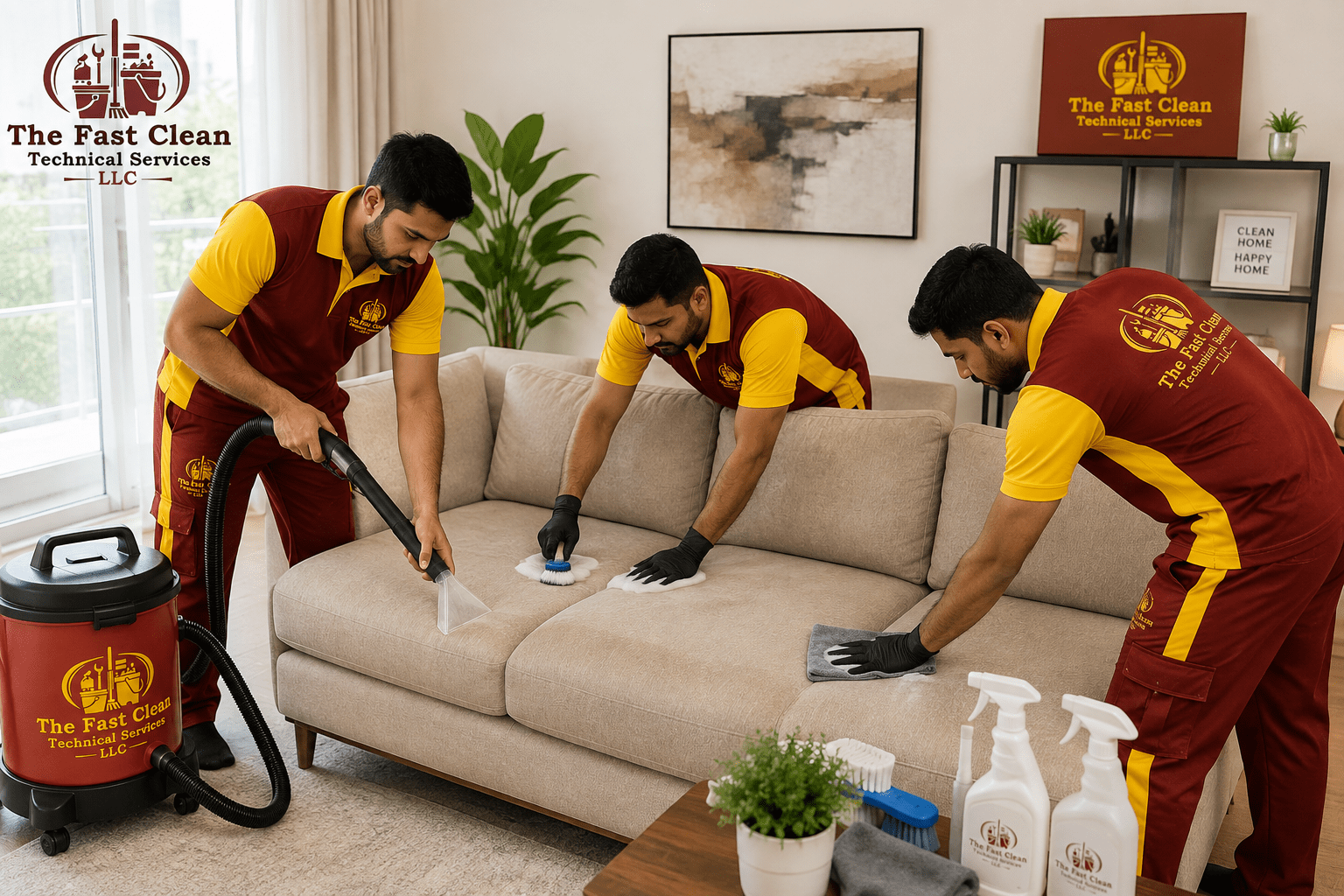
Your sofa may look clean, but that does not always mean the upholstery is clean. As one of the most frequently used pieces of furniture in a home, a sofa is exposed to dust, crumbs, body oils, pet hair, food and drink spills, everyday contact and general household activity. Much of this buildup is not obvious until the fabric starts looking dull, smelling different or developing visible stains.So, how often should you clean your sofa?
For most households, I recommend a combination of weekly maintenance and professional deep cleaning every 6–12 months. If your sofa is used heavily or regularly exposed to children, pets, food spills or significant dust, a 3–6 month deep-cleaning interval may be more appropriate.
If you are looking for professional help, sofa cleaning services in Dubai can be considered when routine vacuuming and spot cleaning are no longer enough. The important thing is not to follow one arbitrary number.
Your ideal sofa cleaning frequency depends on how often the sofa is used, what the upholstery is made from, what it is exposed to, and what condition it is currently in.
How Often Should You Clean Your Sofa?
I would separate sofa care into three different levels rather than treating every type of cleaning as the same task.
1. Routine Maintenance
For most households, vacuuming the sofa approximately once a week is a sensible starting point.
This helps remove loose:
- Dust
- Crumbs
- Pet hair
- Surface debris
- Loose dirt
Homes with pets, children or heavy sofa use may need more frequent vacuuming.
2. Spot Cleaning
Spills and fresh stains should generally be dealt with as soon as possible, using a method appropriate for the upholstery.
Waiting for your next professional cleaning appointment is not a good strategy when a drink, food or other substance has just been spilled.
The safest approach is to check the manufacturer’s care instructions before applying any cleaning product.
3. Professional Deep Cleaning
For an average household sofa, every 6–12 months is a practical starting point. For heavily used sofas, homes with pets or children, or furniture regularly exposed to food and drink, every 3–6 months may make more sense.
These are guidelines rather than hard rules. If your sofa is visibly dirty, develops a persistent odor or accumulates heavy buildup before the scheduled date, its condition is a better reason to clean it than the calendar.
Sofa Cleaning Frequency at a Glance
| Sofa or household situation | Practical cleaning guideline |
|---|---|
| Lightly used sofa | Professional cleaning every 9–12 months |
| Average household use | Every 6–12 months |
| Heavy daily use | Around every 6 months |
| Homes with children | Every 3–6 months or as needed |
| Homes with pets | Every 3–6 months or as needed |
| Frequent guests | Every 3–6 months depending on use |
| Frequent food or drink spills | Clean spills immediately; deep clean as needed |
| Persistent odors | Assess and clean as needed |
| Delicate upholstery | Follow manufacturer instructions |
This table should be viewed as a decision framework, not a fixed prescription. A lightly used sofa may need less frequent professional attention, while a heavily used family sofa may need considerably more.
What Is the Difference Between Cleaning and Deep Cleaning a Sofa?
This distinction is important because many people use “cleaning” and “deep cleaning” interchangeably. They are not necessarily the same thing.
Routine sofa cleaning is about controlling everyday buildup. It includes vacuuming, removing crumbs, managing loose pet hair and dealing with suitable fresh spills.
Deep sofa cleaning is a more intensive process intended to address accumulated dirt, suitable stains and other buildup that routine maintenance cannot adequately deal with.
Think of it this way:
Routine cleaning maintains the sofa. Deep cleaning resets its condition.
You need both. If you deep clean your sofa once a year but never vacuum it, substantial buildup can still occur between appointments.
If you vacuum every week but never address established stains, odors or deeper soil, routine maintenance may eventually stop being enough.
How Often Should You Deep Clean Your Sofa?
For most sofas, professional deep cleaning every 6–12 months is a reasonable starting point.
I would consider moving toward the shorter end of that range when the sofa has one or more of these characteristics:
- It is used for several hours every day.
- Children regularly sit or play on it.
- Pets sleep or sit on it frequently.
- People regularly eat or drink on it.
- The sofa is exposed to considerable household dust.
- Stains appear repeatedly.
- High-contact areas become visibly darker or greasy.
- Odors develop quickly.
- The sofa has not been professionally cleaned for a long time.
- Routine vacuuming no longer keeps it looking fresh.
The opposite is also true. If a sofa sits in a formal room and receives very little use, there may be no reason to force it onto a three-month professional cleaning schedule.
How Often Should You Vacuum Your Sofa?
For an average household, I recommend starting with once-a-week vacuuming. If you have pets or children, or your sofa is the main seating area in the home, you may need to vacuum more frequently. Do not vacuum only the visible seat surface.
A proper maintenance routine should include:
- Seat cushions
- Back cushions
- Cushion seams
- Gaps between cushions
- Armrests
- Corners
- Under removable cushions
- Areas where pets sleep
- Areas where food is regularly eaten
Use an upholstery attachment where appropriate and avoid aggressive brushing on delicate materials.
Regular vacuuming is particularly useful because loose dirt can be removed before it becomes harder to manage. However, vacuuming is not a substitute for deep cleaning.
A vacuum is designed to remove accessible loose debris. It does not automatically deal with every stain, odor, oil buildup or embedded soil within upholstery.
Why Cushion Gaps and Seams Need More Attention
If you have ever lifted a sofa cushion and found crumbs, dust or hair underneath, you already know why this matters. Cushion gaps are among the easiest places to overlook during routine cleaning.
I recommend making these areas part of your normal weekly maintenance rather than waiting for a professional cleaning appointment.
A simple routine is:
- Remove loose cushions where possible.
- Vacuum the visible upholstery.
- Vacuum seams and gaps.
- Clean underneath removable cushions.
- Remove loose hair and debris.
- Inspect the upholstery for developing stains.
This small habit can make a noticeable difference to how quickly the sofa becomes visibly dirty.
What Determines How Often Your Sofa Needs Cleaning?
There is no universal sofa cleaning schedule because several variables affect how quickly upholstery becomes soiled.
Sofa Usage
Usage is one of the strongest indicators. A sofa used every evening for television, meals, conversations and relaxation receives substantially more contact than a sofa that is used occasionally.
If your sofa is effectively the center of your household, expect to maintain it more frequently.
Children
Children can increase exposure to:
- Crumbs
- Juice and soft-drink spills
- Food stains
- Sticky substances
- Dirt
- General wear
If young children regularly use the sofa, inspect high-use areas more often.
Pets
Pets can transfer:
- Loose hair
- Outdoor dirt
- Dust
- Odors
- Other debris
The actual impact depends on the pet, how often it uses the sofa and how much time it spends outdoors.
A pet-friendly sofa generally benefits from more frequent vacuuming and closer monitoring.
Food and Drinks
Eating on the sofa creates additional opportunities for spills and crumbs. When a spill occurs, act promptly and follow the upholstery manufacturer’s cleaning instructions.
Do not automatically apply a household cleaning mixture simply because it worked on another fabric.
Upholstery Material
A cotton fabric sofa, microfiber sofa, velvet sofa, suede-style upholstery and leather sofa can all have different cleaning requirements.
The material can affect:
- What cleaning products are suitable
- Whether water can be used
- Whether steam is appropriate
- How much moisture can be tolerated
- How the upholstery should be dried
- Whether professional cleaning is recommended
This is why identifying the material should come before choosing the cleaning method.
Dust and Indoor Environment
Dust exposure can also influence maintenance frequency. Homes with frequent outdoor activity, open doors, high foot traffic, pets or other sources of dust may need to vacuum upholstered furniture more often.
Frequent Guests
Regular entertaining increases sofa usage and can also increase the chance of food and drink spills. If you host frequently, inspect the sofa after gatherings rather than waiting until the next scheduled deep clean.
Does Dubai’s Climate Affect Sofa Cleaning Frequency?
Dubai’s environment is another factor worth considering, but it should not be turned into an automatic cleaning rule. Dust and fine sand can enter homes through everyday movement and outdoor exposure. Air conditioning is also used extensively throughout the year, while sofas remain in constant contact with household occupants.
This combination can make regular upholstery maintenance particularly important. However, I would not say that every sofa in Dubai automatically needs professional cleaning every three months.
Instead, consider:
- How often the sofa is used
- Whether children use it
- Whether pets use it
- How quickly dust accumulates
- Whether food is regularly consumed on it
- Whether stains appear
- Whether odors develop
- When it was last professionally cleaned
A lightly used sofa in a well-maintained apartment may need less frequent professional cleaning than a heavily used family sectional.
For broader UAE home-maintenance guidance, you can also see our complete property care guide for UAE homes, which covers how different cleaning and maintenance tasks can be scheduled around usage and property conditions.
12 Signs Your Sofa Needs a Deep Clean
You do not always need to wait until your sofa looks extremely dirty.
Here are the signs I would pay attention to.
1. Visible Stains
Food, drinks, makeup and everyday accidents can leave marks on upholstery.
If suitable spot cleaning does not resolve the problem, professional treatment may be appropriate.
2. Persistent Odors
A sofa that develops a smell that remains after normal vacuuming may need more thorough cleaning.
3. Darker Seat Areas
Frequently used seats can gradually appear darker than less-used upholstery.
4. Greasy Armrests
Constant contact with hands and skin can cause high-contact areas to develop a different appearance or feel.
5. Heavy Dust Around Seams
If you repeatedly find dust around seams and cushion gaps, your sofa may need a more thorough clean.
6. Increasing Pet Hair
If pet hair returns quickly after vacuuming, your maintenance routine may need to become more frequent.
7. Crumbs Under Cushions
Repeated food debris under cushions is a good reason to inspect the sofa more thoroughly.
8. Stains That Keep Returning
A recurring mark may require more than surface-level treatment.
9. Unusual Odor After Vacuuming
Vacuuming removes loose material, but it does not necessarily address every source of odor.
10. Dull-Looking Upholstery
A sofa can gradually lose its fresh appearance without developing one obvious stain.
11. The Sofa Has Not Been Deep Cleaned for More Than a Year
If it has been more than 12 months, assess the sofa even if it still appears acceptable.
12. Heavy Everyday Use
Sometimes the strongest indicator is simply how much the sofa is used. A sofa that is occupied for several hours every day naturally deserves more frequent attention than one used occasionally.
How Often Should You Clean a Sofa With Pets?
Pet owners should think about sofa cleaning in two separate ways.First, manage hair and loose debris frequently.
Second, schedule deeper cleaning according to buildup and usage.
If your pet regularly sleeps or sits on the sofa, I would start with:
- Frequent vacuuming
- Regular inspection of cushion gaps
- Prompt treatment of suitable stains
- Professional deep cleaning approximately every 3–6 months when needed
The exact interval depends on the pet, the upholstery and how quickly the sofa becomes dirty or develops odors.
How Often Should You Clean a Sofa With Children?
With children, the biggest issue is usually not dust alone.
It is the combination of:
- Food
- Drinks
- Crumbs
- Sticky residues
- Frequent contact
- Accidental stains
For a heavily used family sofa, 3–6 months can be a sensible professional cleaning range. But again, I would not wait for a date if there is a significant spill or obvious staining.
Deal with suitable fresh spills promptly and follow the manufacturer’s care instructions.
How Often Should You Clean a Sectional or L-Shaped Sofa?
A large sectional does not automatically need to be cleaned more frequently simply because it is larger.
However, sectionals often contain:
- More seating areas
- More cushion gaps
- Larger chaise sections
- More high-contact surfaces
- More hidden areas beneath cushions
If the sectional is the main seating area in a busy household, I would assess it as a heavy-use sofa rather than relying on its size alone. Pay particular attention to the corner section and chaise, where people and pets may spend long periods.
How Often Should You Clean Different Sofa Materials?
Fabric Sofa
Fabric upholstery can collect dust, hair, crumbs and spills.Vacuum regularly and follow the manufacturer’s instructions for spot treatment and deep cleaning.
Microfiber Sofa
Microfiber may have specific care requirements depending on its construction. Do not assume that every microfiber sofa can be cleaned using the same water or solvent method.
Velvet Sofa
Velvet and other delicate materials require additional caution. Avoid aggressive scrubbing, excessive moisture and untested cleaning chemicals.
Suede or Suede-Like Upholstery
Suede and synthetic suede can have very different care requirements. Check the manufacturer’s instructions before applying any liquid cleaner.
Leather Sofa
Leather should not automatically be treated like fabric. Use products and maintenance methods appropriate for the specific type and finish of leather.
General furniture-care guidance also emphasizes following manufacturer instructions for leather furniture.
Removable Sofa Covers
A removable cover is not automatically machine washable.
Check the care label before removing and washing it.
Understanding Sofa Cleaning Codes
Some upholstery manufacturers provide cleaning codes that indicate which cleaning methods are suitable.
Common codes include:
- W: Water-based cleaning may be suitable.
- S: Solvent-based cleaning may be recommended.
- WS / SW: Both water- and solvent-based methods may be permitted.
- X: Vacuuming or limited cleaning may be recommended, with professional guidance potentially required for deeper cleaning.
These codes are useful, but the manufacturer’s full care instructions should take priority.
If the label is missing, damaged or unclear, do not guess.
What Should You Do When You Spill Something on the Sofa?
The first rule is simple:
Do not panic and do not immediately scrub the stain aggressively.
A sensible response is:
- Remove any solid material carefully.
- Blot excess liquid with a clean material.
- Check the upholstery care instructions.
- Use only a cleaning method appropriate for the fabric.
- Avoid excessive moisture.
- Allow the area to dry properly.
- If the stain remains, consider professional treatment.
For suitable upholstery, manufacturer guidance commonly emphasizes acting quickly on spills and blotting rather than aggressively rubbing. Sunbrella, for example, recommends addressing spills promptly, blotting liquid spills and following material-specific cleaning instructions.
The important point is that there is no universal DIY stain-removal recipe that is safe for every sofa.
Can You Deep Clean a Sofa Yourself?
You can absolutely handle routine sofa maintenance yourself.
I would normally consider these reasonable household tasks:
- Vacuuming
- Removing crumbs
- Removing loose pet hair
- Cleaning cushion gaps
- Blotting suitable fresh spills
- Cleaning approved removable covers
- Following manufacturer-approved spot-cleaning instructions
Where I would be more cautious is attempting a full deep clean without knowing the upholstery.
Professional cleaning becomes more useful when you have:
- Stubborn stains
- Large areas of staining
- Persistent odors
- Heavy soil buildup
- Delicate upholstery
- Expensive furniture
- Unknown fabric composition
- Large sectionals
- Previous failed DIY cleaning attempts
One of the most common mistakes is assuming that more water, more detergent or more scrubbing means a better clean.
That is not necessarily true.
Excess moisture can create longer drying times, while aggressive scrubbing can affect delicate fibers or change the appearance of upholstery.
Common Sofa Cleaning Mistakes
Using One Cleaning Product on Every Sofa
Different materials can react differently to cleaning chemicals.
Over-Wetting the Upholstery
More water is not automatically better.
Scrubbing Stains Aggressively
Rubbing can spread certain spills and may damage some fabrics.
Ignoring the Care Label
Always check the manufacturer’s instructions before using water, steam or cleaning chemicals.
Waiting Too Long to Treat Spills
Prompt attention can make suitable stains easier to manage.
Cleaning Only the Visible Surface
Cushion gaps and hidden areas can contain substantial loose debris.
Assuming Steam Cleaning Is Safe for Every Sofa
Steam is a method, not a universal solution.
Its suitability depends on the upholstery.
Ignoring Drying Conditions
A sofa should be allowed to dry appropriately after cleaning rather than being returned immediately to heavy use.
What Happens During Professional Sofa Cleaning?
A professional sofa-cleaning service should begin with an assessment rather than immediately applying water or chemicals.
At The Fast Clean, the process includes several stages.
Pre-Inspection
The sofa is inspected to identify the upholstery type, condition and areas requiring special attention.
Dust and Debris Extraction
Loose dust, hair and debris are removed before deeper cleaning.
Stain Treatment
Suitable stains may be pre-treated according to the upholstery and nature of the stain.
Deep Shampoo or Steam Cleaning
The appropriate cleaning method is selected to clean the upholstery and address accumulated dirt.
Sanitization and Deodorization
Additional treatments may be used where appropriate to refresh the sofa and address unwanted odors.
Final Check and Drying
The sofa is checked after cleaning and drying guidance is provided.
This process matters because professional sofa cleaning should be more than simply applying a cleaning solution to the visible surface.
The upholstery should be assessed first, and the method should be appropriate for the material.
How Long Does a Sofa Take to Dry After Cleaning?
There is no single drying time for every sofa.
Drying depends on:
- Upholstery material
- Cleaning method
- Amount of moisture
- Cushion thickness
- Ventilation
- Temperature
- Humidity
- Air movement
The Fast Clean states that its sofas typically take around 4–6 hours to dry, depending on the fabric and humidity.
Follow the cleaner’s specific instructions rather than assuming every sofa will be ready after exactly the same amount of time.
How to Keep Your Sofa Cleaner for Longer
Professional deep cleaning should not be the only time you think about sofa care.
Vacuum Weekly
Make sofa vacuuming part of your regular home-cleaning routine.
Check Under Cushions
Do not ignore the areas where crumbs and dust naturally collect.
Treat Spills Promptly
Follow the manufacturer’s recommended method.
Blot Instead of Scrubbing
Avoid aggressive rubbing unless the upholstery manufacturer specifically recommends it.
Manage Pet Hair
Regular vacuuming and appropriate pet grooming can reduce loose hair.
Reduce Food and Drink Spills
If your household frequently eats on the sofa, practical precautions can reduce staining and crumbs.
Rotate Cushions When Appropriate
If the manufacturer permits cushion rotation, periodically changing positions can help distribute everyday wear.
Follow the Care Label
This should always take priority over generic internet cleaning advice.
Inspect the Sofa Regularly
A quick inspection every few weeks can identify problems before they become larger cleaning jobs.
A Practical Sofa Cleaning Schedule for Busy Homes
If you want a straightforward routine, use this as your starting point.
Weekly
- Vacuum the sofa
- Clean cushion gaps
- Remove loose hair
- Remove crumbs
- Inspect high-contact areas
Every Few Weeks
- Check armrests
- Check seat cushions
- Inspect underneath cushions
- Look for stains
- Check for unusual odors
Every 3–6 Months
Consider professional cleaning if the sofa is heavily used or exposed to:
- Children
- Pets
- Food and drinks
- Frequent guests
- Significant dust
- Repeated stains
Every 6–12 Months
For an average household sofa, consider professional deep cleaning within this range.
Immediately When Needed
Do not wait for the scheduled date after:
- Significant spills
- New stains
- Persistent odors
- Heavy contamination
- Noticeable buildup
How Sofa Cleaning Fits Into Overall Home Cleaning
Your sofa should not be considered separately from the rest of the home’s soft furnishings.
A household that regularly maintains its sofa may also need to think about carpets, mattresses, curtains and other frequently used surfaces.
For example, if your sofa and carpet are both receiving heavy daily use, cleaning them on completely unrelated schedules may not make practical sense.
You can coordinate specialist services such as carpet cleaning in Dubai with your broader home-maintenance routine when required.
Likewise, a larger property may benefit from combining upholstery maintenance with periodic deep cleaning services in Dubai rather than waiting until multiple areas require attention simultaneously.
The objective is not to clean everything constantly.
It is to create a maintenance system based on usage, condition and priority.
When Should You Call a Professional Sofa Cleaning Service?
I would consider professional sofa cleaning when normal maintenance is no longer enough.
That includes:
- Persistent stains
- Heavy dirt buildup
- Unpleasant odors
- Greasy high-contact areas
- Significant pet hair accumulation
- Frequent child-related spills
- Delicate upholstery
- Large sectional sofas
- Unknown cleaning requirements
- A sofa that has not been deep cleaned for a long time
- Previous DIY cleaning attempts that did not produce the desired result
If you are unsure about the appropriate cleaning method, professional assessment is generally safer than experimenting with an unknown product.
Frequently Asked Questions
How often should you clean your sofa?
For most households, vacuuming about once a week and professional deep cleaning every 6–12 months is a practical starting point. Homes with pets, children or heavy daily use may need professional cleaning every 3–6 months.
How often should you deep clean a sofa?
Most sofas can be professionally deep cleaned every 6–12 months, while heavily used sofas may need cleaning every 3–6 months. Visible stains, persistent odors and heavy buildup are reasons to clean sooner.
How often should you clean a sofa with pets?
Vacuum regularly and consider professional deep cleaning every 3–6 months, depending on how frequently pets use the sofa and how quickly hair, dirt or odors accumulate.
Can every sofa be steam cleaned?
No. The appropriate cleaning method depends on the upholstery material and manufacturer’s instructions. Never assume steam is safe simply because it is commonly used for upholstery.
How long does sofa cleaning take to dry?
Drying depends on the upholstery, cleaning method, moisture level, ventilation and humidity. The Fast Clean states that its sofas typically take around 4–6 hours to dry, depending on fabric and humidity.
Final Thoughts
Regular sofa cleaning helps keep your furniture fresh, comfortable and looking its best for longer. Vacuum regularly, clean spills quickly, and deep clean your sofa every 6–12 months depending on its use and condition.
If your sofa needs a deeper clean, The Fast Clean provides professional sofa cleaning services in Dubai using methods suitable for different upholstery types. Regular professional cleaning can help maintain your sofa and keep it looking fresh for longer.