How to Clean Kitchen Exhaust Hood is an important question for homeowners who want to maintain a cleaner and more comfortable cooking environment. Daily cooking produces smoke, oil droplets and grease particles that can settle on extractor hood surfaces and filters. Over time, this buildup can become sticky, attract dust and affect the performance of accessible filter components.
Learning how to clean kitchen exhaust hood and filters correctly can make everyday kitchen maintenance easier. In Dubai, regular kitchen exhaust hood cleaning is particularly useful for households that cook frequently. While everyday wiping removes visible dirt, grease filters often require more detailed attention.
This complete guide explains how to clean a kitchen exhaust hood step by step, how to remove grease from filters, which cleaning products to use and when professional assistance may be necessary.
How to Clean Kitchen Exhaust Hood: Why Regular Maintenance Matters
A kitchen exhaust hood, also called a cooker hood or extractor hood, is installed above the cooking area. Depending on its design, it removes cooking air through an external duct or filters the air and circulates it back into the kitchen.
When learning how to clean kitchen exhaust hood surfaces, it is important to understand where grease accumulates. During cooking, oil droplets and grease particles travel through the air and settle on the hood, filters and surrounding surfaces. Over time, this residue becomes sticky and attracts dust.
Regular kitchen exhaust hood cleaning helps:
- Remove accumulated grease from accessible surfaces.
- Maintain clean and properly fitted grease filters.
- Reduce unpleasant cooking odours caused by dirty filters.
- Prevent excessive dirt buildup around the cooking area.
- Keep kitchen equipment in better maintained condition.
- Identify damaged or heavily clogged filters that may need replacement.
Cleaning the hood does not replace servicing or repairing a faulty ventilation system. If airflow remains poor after cleaning, the fan, ductwork or other components may need professional inspection.
Different Types of Kitchen Exhaust Hood Filters
Before following the steps for how to clean kitchen exhaust hood filters, identify which filter your appliance uses. Different filters require different cleaning methods.
1. Metal Grease Filters
Metal grease filters are commonly made from aluminium or stainless steel. They capture grease particles before cooking air passes through the ventilation system. Many removable metal filters can be washed using suitable detergent and warm water. Some models are also dishwasher-safe, depending on the manufacturer's instructions.
2. Charcoal Filters
Charcoal filters are commonly used in recirculating or ductless extractor hoods. Their purpose is to help absorb cooking odours. Many charcoal filters are not washable and must be replaced when their effectiveness decreases. Some models use specially designed washable carbon filters, so always check the product manual.
3. Baffle Filters
Baffle filters are commonly found in commercial kitchen ventilation systems. Their angled metal construction helps separate grease from cooking vapours. They require regular inspection and cleaning according to the equipment manufacturer's instructions and applicable requirements.
How to Clean Kitchen Exhaust Hood and Filters: Step-by-Step Guide
Follow these practical steps for routine cleaning of an accessible residential kitchen exhaust hood. The correct cleaning method depends on the appliance design and filter manufacturer's instructions.
1 Switch Off the Kitchen Exhaust Hood
The first step in how to clean kitchen exhaust hood safely is switching off the appliance.
Before cleaning, switch off the extractor hood and its lighting. Disconnect the appliance from the power supply where the manufacturer's instructions require it.
Allow the hood, lights and cooking surfaces to cool completely before touching or removing any components.
Prepare the following items:
- Microfibre cleaning cloths.
- Warm water.
- Mild dishwashing detergent.
- A soft cleaning brush.
- A suitable non-abrasive degreaser.
- A clean towel.
- Protective gloves.
Avoid using harsh chemicals or abrasive tools unless the appliance manufacturer specifically permits them.
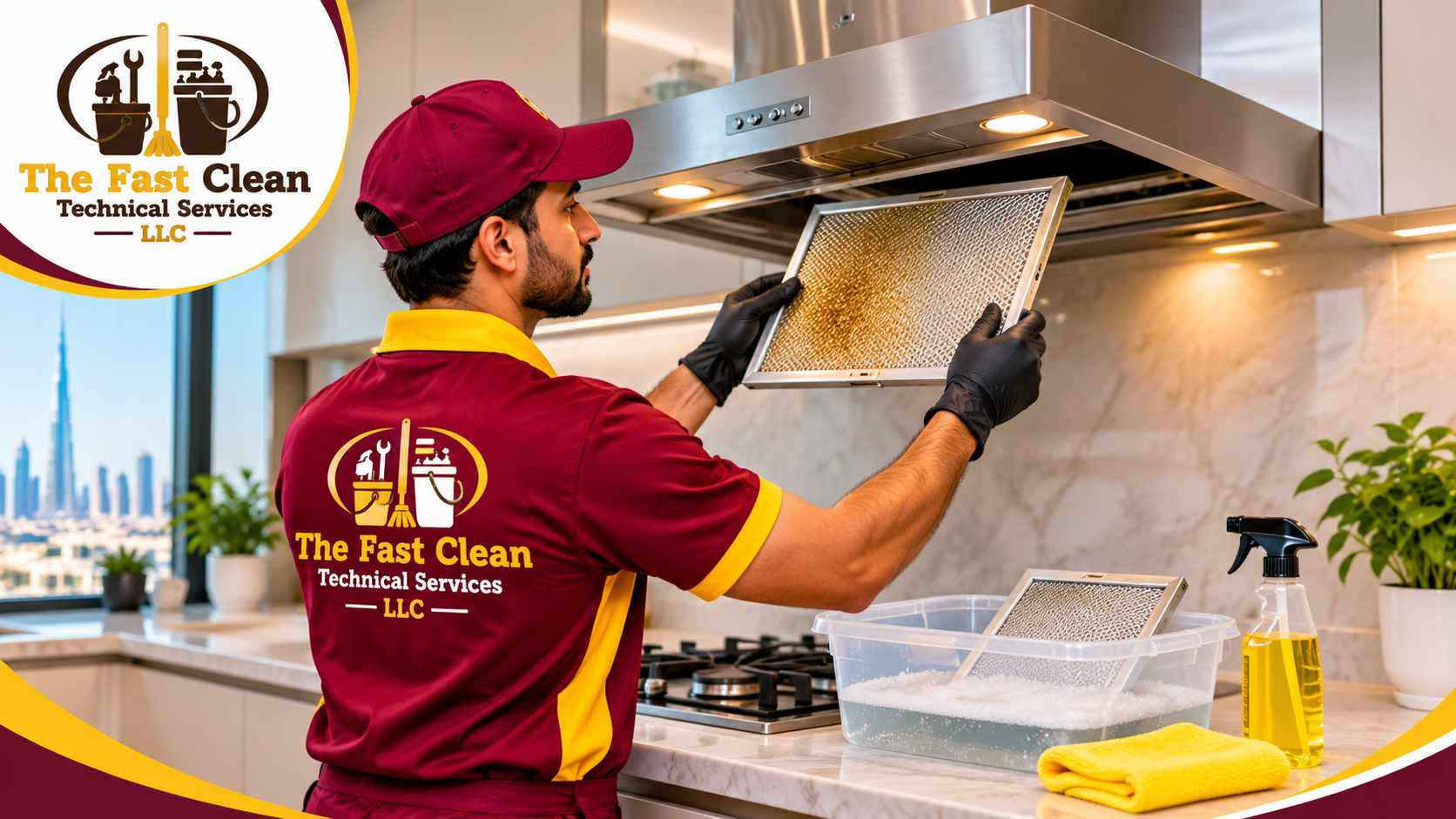
2 Remove the Kitchen Exhaust Hood Grease Filters
Most removable metal grease filters have a spring-loaded handle, latch or retaining mechanism.
Support the filter with one hand while releasing its locking mechanism with the other. Lower it carefully without bending the frame.
If your extractor hood has several filters, remove them one at a time.
Check the filter for:
- Thick grease deposits.
- Damaged mesh or metal sections.
- Loose frames or broken clips.
- Excessive discolouration.
- Signs of corrosion.
If a filter is damaged, replacing it with the correct compatible component may be more appropriate than attempting to repair it.
3 Prepare a Grease-Removing Cleaning Solution
For washable metal grease filters, prepare warm water with a suitable amount of mild dishwashing detergent or a manufacturer-approved degreasing product.
The cleaning solution should be appropriate for the filter material.
Avoid mixing cleaning chemicals. Never combine bleach with acidic products or ammonia-based cleaners.
For heavily soiled filters, soaking may help loosen grease, but only use this method if the manufacturer's instructions allow it.
4 Soak and Clean the Metal Filters
Place washable metal filters in a suitable sink or basin.
Allow them to soak according to the cleaning product instructions and the filter manufacturer's recommendations.
Use a soft nylon brush or non-abrasive sponge to remove loosened grease. Pay attention to corners, grooves and areas where oil collects.
Avoid steel wool, hard wire brushes, aggressive scraping, strong chemicals that can damage aluminium and excessive pressure that can bend the filter mesh.
Once the grease has loosened, rinse the filter thoroughly with clean water.
5 Clean the Kitchen Exhaust Hood Exterior
While the removable filters are drying, clean the accessible exterior of the exhaust hood. This is an important part of how to clean kitchen exhaust hood surfaces without damaging the appliance.
Apply a suitable cleaning solution to a soft microfibre cloth rather than spraying directly into the appliance.
Wipe the following areas:
- Outer hood surface.
- Accessible underside.
- Front edges.
- Control panel surroundings.
- Accessible grease marks.
For stainless steel surfaces, wipe in the direction of the grain to reduce the chance of visible streaks and scratches.
Do not allow water or cleaning liquid to enter electrical switches, lights, the motor or ventilation openings.
6 Clean Accessible Areas Around the Filter Housing
Once the filters are removed, inspect the accessible filter housing for visible grease and dust.
Use a lightly damp cloth and a suitable cleaner to wipe accessible surfaces. Do not reach into electrical compartments or attempt to dismantle the motor, fan or ductwork.
If grease is present inside inaccessible components, arrange an appropriate professional inspection rather than attempting a risky DIY cleaning procedure.
7 Rinse and Dry the Filters Completely
After cleaning, rinse washable metal filters thoroughly to remove detergent and loosened grease.
Allow the filters to dry completely using a clean towel or air-drying method.
Never reinstall a wet filter. Moisture can remain trapped in its mesh or frame and may cause problems during operation.
8 Reinstall the Exhaust Hood Filters Correctly
Once the filters are completely dry, reinstall them according to the appliance manual.
Make sure that:
- The filter is positioned correctly.
- All retaining clips are secured.
- The filter sits firmly in its housing.
- No component is bent or loose.
Never operate the exhaust hood without the required grease filters installed.
9 Check the Kitchen Exhaust Hood Operation
The final step in how to clean kitchen exhaust hood filters is checking the appliance after reinstallation.
Restore power according to the manufacturer's instructions. Check that the hood switches on normally and that there are no unusual sounds, loose components or visible problems.
If the extractor hood still has poor airflow, persistent odours or unusual noise, arrange professional inspection. Cleaning the filter alone may not resolve a ventilation or mechanical problem.
How to Clean Different Kitchen Exhaust Hood Surfaces
Different hood materials require different cleaning approaches. Using an unsuitable product can leave marks or damage the surface finish.
| Surface | Recommended Cleaning Approach |
|---|---|
| Stainless steel | Mild detergent and a soft microfibre cloth. |
| Glass | Compatible glass cleaner and a soft cloth. |
| Aluminium filters | Manufacturer-approved detergent and gentle brushing. |
| Painted surfaces | Non-abrasive cleaner suitable for the finish. |
| Plastic components | Mild cleaner approved for the material. |
Always test a cleaning product on a small, inconspicuous area when its compatibility is uncertain. Avoid chlorine-based or abrasive products on stainless steel unless specifically approved by the manufacturer.
How Often Should Kitchen Exhaust Hood Filters Be Cleaned?
The cleaning frequency depends on cooking habits, filter design, appliance instructions and the amount of grease produced.
A household that cooks frequently may need to inspect its filters more often than a household that uses the kitchen occasionally.
- After cooking: Wipe visible grease from accessible exterior surfaces.
- Weekly: Inspect the hood and look for visible grease accumulation.
- Monthly: Check removable filters and clean them when required, following the manufacturer's guidance.
- Periodically: Inspect the appliance condition and replace non-washable filters according to the manual.
These are general household maintenance suggestions, not universal manufacturer requirements. Always follow the instructions supplied with your specific extractor hood.
Commercial Kitchen Exhaust Hood Cleaning in Dubai
Commercial kitchens require additional attention because cooking equipment may produce larger amounts of grease and smoke.
Dubai Municipality's Technical Guidelines for Occupational Health and Safety in Kitchens and Food Preparation Areas discuss cooker hood maintenance, accessible grease filters, oil collectors and ventilation cleaning.
The guidance specifies daily cleaning of cooker surfaces and hoods, and regular filter removal and cleaning at least once a week for the covered commercial kitchen context.
Commercial kitchen exhaust systems may also contain internal ductwork, fans and other components that require specialist cleaning. These jobs should not be treated as ordinary household extractor hood cleaning.
Businesses should follow applicable Dubai Municipality requirements and use appropriately qualified and approved service providers where required.
Read the Dubai Municipality kitchen and food preparation safety guidelines for further information.
Common Mistakes to Avoid When Cleaning Exhaust Hood Filters
1. Washing Every Filter
Some charcoal filters are designed for replacement rather than washing. Always identify the filter type first.
2. Using Aggressive Chemicals
Strong degreasers may damage aluminium, painted finishes or other materials. Select products that are compatible with the filter and appliance.
3. Scrubbing with Wire Brushes
Hard brushes can damage filter mesh and protective finishes. Use a soft brush or non-abrasive sponge.
4. Reinstalling Wet Filters
Always allow washable filters to dry completely before reinstalling them.
5. Spraying Liquid into Electrical Components
Keep cleaning solutions away from motors, switches and electrical connections.
6. Ignoring Persistent Ventilation Problems
A dirty filter may not be the only reason for poor airflow or lingering cooking smells.
7. Forgetting the Manufacturer's Manual
Cleaning methods and filter replacement intervals vary between appliance models.
When Should You Consider Professional Kitchen Exhaust Hood Cleaning?
Routine household cleaning is suitable for accessible surfaces and removable filters that are designed to be maintained by the owner.
Professional assistance may be appropriate when:
- Grease has accumulated in difficult-to-reach areas.
- The hood has persistent odours despite filter cleaning.
- Filters are damaged or difficult to remove.
- The fan or ventilation system is not working correctly.
- Internal ductwork requires inspection or cleaning.
- A commercial kitchen needs scheduled exhaust-system maintenance.
For general home maintenance, The Fast Clean offers cleaning solutions for residential and commercial customers. Visit the official website to explore available services and discuss your requirements.
Learn more about The Fast Clean's cleaning services in Dubai, Sharjah and Ajman.
Frequently Asked Questions About How to Clean Kitchen Exhaust Hood
How do I clean a kitchen exhaust hood filter at home?
First, switch off the appliance and allow it to cool. Remove the washable metal filter according to the manual, clean it with a suitable detergent and soft brush, rinse it thoroughly, dry it completely and reinstall it securely.
Can I put kitchen exhaust hood filters in the dishwasher?
Some metal grease filters are dishwasher-safe, but others may be damaged or discoloured by high temperatures and strong detergents. Check your appliance manual before using a dishwasher.
Can charcoal exhaust hood filters be washed?
Most standard charcoal filters are not washable and should be replaced according to the manufacturer's instructions. Some specially designed models are washable, so confirm the filter type first.
How often should I clean my kitchen extractor hood?
Inspect the hood regularly and clean removable grease filters according to the manufacturer's maintenance schedule. Frequent cooking and heavy grease production may require more frequent attention.
Why does my kitchen exhaust hood still smell after cleaning?
The smell may be caused by a saturated charcoal filter, remaining grease, a dirty ventilation component or another appliance issue. Check the filter condition and arrange professional inspection if the odour continues.
Is kitchen exhaust hood cleaning different from duct cleaning?
Yes. Hood cleaning generally focuses on accessible surfaces and filters. Duct cleaning involves internal ventilation passages and may require specialist access, equipment and safety procedures.
Need Help with Kitchen Exhaust Hood Cleaning?
Maintaining a clean kitchen exhaust hood is an important part of regular kitchen maintenance. Removing grease from accessible surfaces, maintaining washable filters and replacing exhausted charcoal filters according to the manufacturer's instructions can help keep the appliance in better condition.
Whether you need help maintaining your kitchen or require broader home cleaning support, The Fast Clean can help you explore suitable cleaning services.
The Fast Clean Technical Services LLC serves customers across Dubai, Sharjah and Ajman. Visit the official website to learn more about its cleaning solutions and contact the team to discuss your requirements.
Explore The Fast Clean