
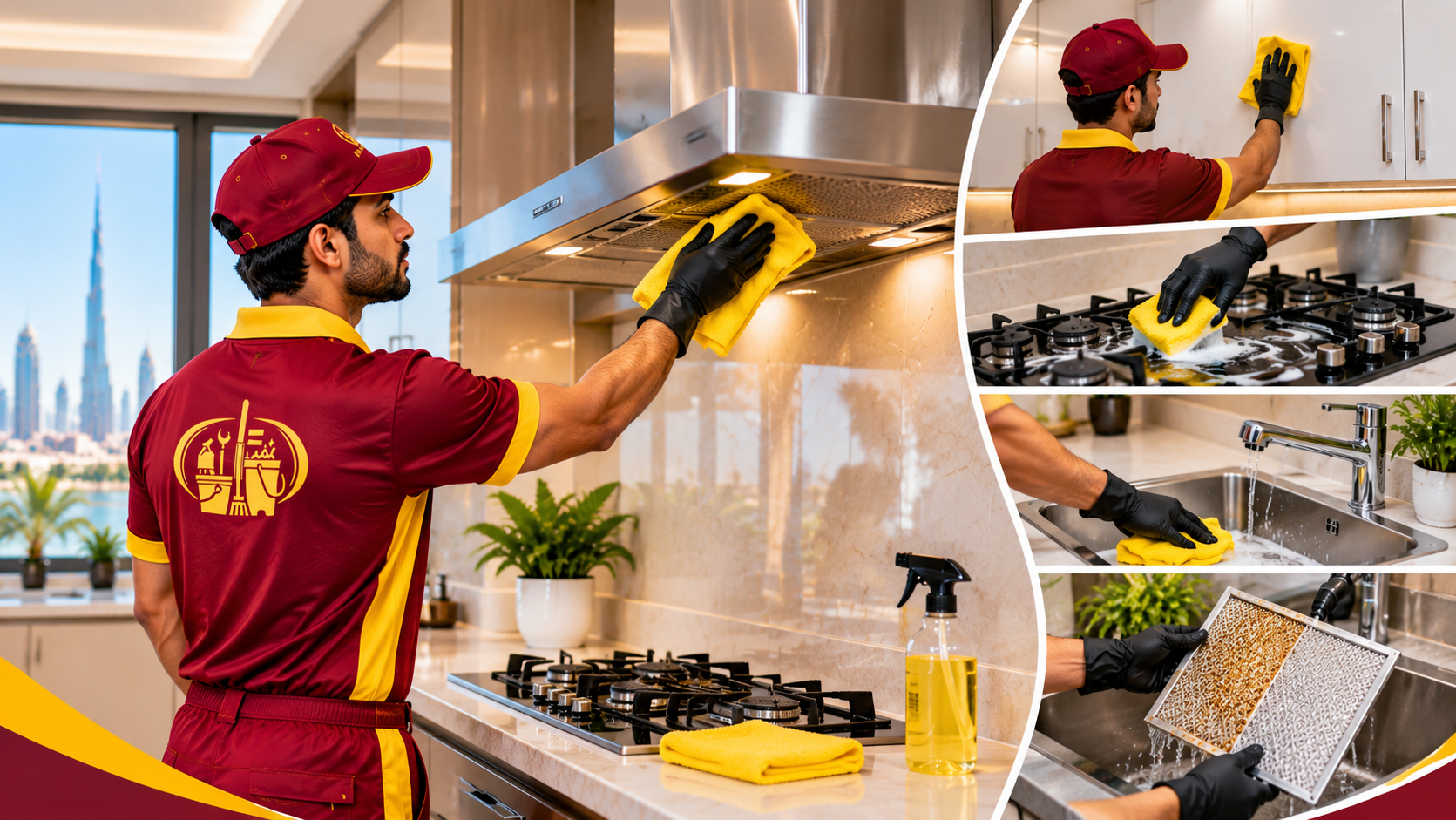
Kitchen Deep Cleaning Dubai is important for maintaining a cleaner, more organised and comfortable cooking environment. Daily cooking produces grease, food splashes, oil residue and moisture that gradually settle on countertops, cabinets, stovetops, extractor hoods and other surfaces. Even when a kitchen looks reasonably clean, hidden grease and dirt can accumulate in corners, behind appliances and around ventilation filters.
In Dubai, regular kitchen maintenance is particularly important for households that cook frequently. A simple wipe-down may remove visible dirt, but stubborn grease and accumulated residue often require a more detailed approach.
This guide explains how to clean kitchen grease, extractor hoods, cabinets, appliances and floors, when professional assistance may be useful, and how to maintain a cleaner kitchen for longer.
What Is Kitchen Deep Cleaning?
Kitchen deep cleaning is a detailed cleaning process that focuses on removing accumulated grease, food residue, dust, stains and dirt from kitchen surfaces and accessible equipment.
Unlike everyday kitchen cleaning, which usually involves wiping countertops and washing dishes, deep cleaning gives attention to areas that are not cleaned as frequently.
Depending on the agreed service scope, a kitchen deep clean may cover:
- Kitchen cabinets and drawer surfaces.
- Stovetops and cooking areas.
- Extractor hood exteriors and accessible filters.
- Backsplash tiles and wall surfaces.
- Countertops and worktops.
- Sinks, taps and surrounding areas.
- Appliance exteriors.
- Kitchen floors, corners and skirting.
- Accessible areas behind movable appliances.
The exact cleaning scope should be confirmed before booking. Cleaning the outside of an oven is different from removing baked-on grease inside it, and cleaning an extractor hood is not automatically the same as cleaning its full exhaust duct.
Why Kitchen Grease Builds Up in Dubai Homes
Cooking naturally releases oil droplets, steam and food particles into the surrounding air. These can settle on nearby surfaces, particularly around stovetops, extractor hoods and upper kitchen cabinets.
When grease remains on a surface, it can attract dust and become increasingly difficult to remove. Cabinet tops, hood filters and backsplash areas may develop a sticky layer even when the rest of the kitchen appears tidy.
Common signs of grease accumulation include:
- Sticky cabinet doors and handles.
- Yellow or brown marks near the cooking area.
- Greasy extractor hood filters.
- Oil residue on backsplash tiles.
- Sticky stovetop controls.
- Persistent cooking odours.
- Dirt collecting around cabinet edges.
Cleaning grease early is usually easier than dealing with thick, hardened buildup.
1. Deep Cleaning Kitchen Cabinets
Kitchen cabinets receive frequent contact from hands, cooking vapours and food preparation activities. Grease often accumulates around handles, doors, hinges and the upper surfaces of wall-mounted cabinets.
How to Clean Kitchen Cabinet Exteriors
Start by removing loose dust with a soft, dry microfibre cloth. Apply a suitable cleaner to the cloth rather than spraying directly into cabinet joints or electrical fittings.
Wipe cabinet doors, handles, edges and accessible surfaces. For stubborn grease, use a cleaner compatible with the cabinet finish and follow its instructions.
Important precautions:
- Avoid excessive water on wooden cabinets.
- Do not use abrasive pads on delicate finishes.
- Test cleaning products on a small, hidden area.
- Dry cleaned surfaces to prevent moisture damage.
- Pay attention to handles and frequently touched areas.
Cleaning Inside Cabinets and Drawers
Cabinet interiors can collect crumbs, food particles, dust and accidental spills. Before cleaning, remove stored items and check for expired food or damaged packaging.
Vacuum loose debris from corners and drawer tracks, then wipe suitable surfaces with a lightly damp cloth and appropriate cleaner. Allow the interiors to dry fully before replacing food and kitchen items.
For broader home cleaning requirements, visit The Fast Clean's official website to explore available services.
2. Extractor Hood and Grease Filter Cleaning
The extractor hood plays an important role in removing cooking vapours, smoke and grease from the kitchen. However, its filters can become clogged with oil residue when they are not cleaned regularly.
Signs Your Kitchen Hood Needs Cleaning
- Visible grease on the hood surface.
- Sticky or discoloured filters.
- Cooking smells that remain after use.
- Oil residue around the filter edges.
- Reduced airflow compared with normal operation.
How to Clean Removable Metal Grease Filters
For washable metal filters, follow the manufacturer's instructions. A general cleaning approach is:
- Switch off the extractor hood and allow it to cool.
- Remove the filter according to the appliance manual.
- Prepare a suitable cleaning solution.
- Soak the filter only if the manufacturer permits it.
- Gently remove loosened grease using a soft brush.
- Rinse thoroughly and allow the filter to dry completely.
- Reinstall it securely according to the manufacturer's instructions.
Avoid spraying liquid into the hood motor, electrical connections or inaccessible duct openings.
What About Extractor Duct Cleaning?
Cleaning a removable grease filter is not the same as cleaning the complete exhaust system. Ducts, fans and internal ventilation components may require specialist access and equipment.
Dubai Municipality's technical guidance for commercial kitchens discusses the maintenance of cooking fume ventilation hoods and ducting, including grease filters and safe cleaning practices. These commercial requirements should not automatically be applied to residential kitchens.
Read the Dubai Municipality kitchen and food preparation safety guidelines for further information.
3. Stovetop, Hob and Cooking Surface Degreasing
The stovetop is one of the first areas to collect grease and food splashes. Spilled sauces, oil and burnt food can create stubborn marks if they are not addressed promptly.
A practical cleaning routine includes:
- Switch off the appliance and allow it to cool.
- Remove detachable burner parts only if the manual permits it.
- Remove loose food particles.
- Apply a compatible cleaner to the appropriate surface.
- Allow the product to work according to its label.
- Wipe away loosened grease using a suitable cloth.
- Dry the surface before using the appliance again.
Glass, ceramic, stainless steel and enamel surfaces require different care. Avoid metal scrapers or abrasive products unless the manufacturer specifically recommends them.
4. Cleaning Backsplash Tiles and Kitchen Walls
Cooking splashes frequently settle on backsplash tiles, grout lines and nearby wall surfaces.
Start by removing loose dust, then apply a suitable degreasing product to the affected surface. Allow it to work according to the product instructions before wiping it away.
For tile grout, use a soft brush and avoid aggressive scrubbing that could damage the joints.
Pay particular attention to:
- Areas behind the stovetop.
- Corners around cooking surfaces.
- Tile joints and grout lines.
- Edges near countertops.
- Areas around switches and fittings.
Always avoid allowing cleaning liquids to enter electrical sockets or switches.
5. Deep Cleaning Kitchen Sinks and Taps
Sinks experience regular contact with food residue, grease, water and cleaning products. Over time, visible marks and mineral deposits can develop around taps, drains and sink edges.
For routine maintenance:
- Remove food particles and loose debris.
- Apply a suitable sink cleaner.
- Clean the basin and drain area.
- Wipe taps and handles using a compatible product.
- Rinse where required.
- Dry the surface with a clean cloth.
Hard water deposits may require a suitable descaling product. However, acidic descalers can damage marble, natural stone and some metal finishes. Always check surface compatibility before use.
6. Kitchen Appliances: What Needs Extra Attention?
Kitchen appliances can develop grease, fingerprints and food residue through daily use. A deep cleaning checklist may include the following areas, depending on the agreed service:
| Appliance | Areas Requiring Attention |
|---|---|
| Oven | Door glass, racks, trays and interior surfaces. |
| Microwave | Interior walls, turntable and exterior. |
| Refrigerator | Shelves, handles, door seals and accessible surfaces. |
| Dishwasher | Door edges, filter area and exterior. |
| Extractor hood | Exterior, underside and removable filters. |
| Stovetop | Cooking surface, controls and removable components. |
Before cleaning any appliance internally, follow its manufacturer's instructions. Disconnect power where required and never allow water or cleaning chemicals to enter electrical components.
If appliance interiors are required as part of a professional cleaning appointment, confirm this before booking.
7. Deep Cleaning Kitchen Floors and Corners
Kitchen floors can collect food crumbs, oil splashes, dust and dirt carried in from other rooms. Grease may also settle around skirting boards and under accessible appliances.
A practical cleaning process involves:
- Removing loose debris through sweeping or vacuuming.
- Identifying the floor material.
- Selecting a compatible floor cleaner.
- Cleaning visible marks and greasy areas.
- Paying attention to corners and edges.
- Rinsing or wiping according to product instructions.
- Allowing the floor to dry before normal use.
Different floor materials need different cleaning methods. Marble, ceramic, porcelain and vinyl should not automatically be treated with the same chemicals or tools.
8. How Often Should You Deep Clean Your Kitchen?
There is no single schedule that suits every household. Cleaning frequency depends on how often you cook, the number of people using the kitchen, the type of food preparation and the amount of grease produced.
| Frequency | Recommended Tasks |
|---|---|
| After cooking | Wipe countertops, stovetop splashes and visible spills. |
| Daily | Clean frequently used surfaces and manage food waste. |
| Weekly | Clean cabinet fronts, sink, backsplash and accessible appliance exteriors. |
| Monthly | Inspect hood filters, cabinet tops and less-used areas. |
| Periodically | Arrange a more detailed kitchen deep clean based on buildup. |
If you cook frequently, inspect the extractor filters and cooking surfaces more often rather than relying only on a fixed monthly schedule.
When Should You Book Professional Kitchen Deep Cleaning in Dubai?
Household cleaning can handle everyday maintenance, but heavy grease, difficult-to-reach areas and accumulated residue may require additional attention. Professional kitchen deep cleaning in Dubai may be worth considering when:
- Cabinet doors have stubborn grease buildup.
- Extractor filters are heavily coated with oil.
- The stovetop has persistent residue.
- Kitchen tiles and grout need detailed cleaning.
- Appliance exteriors have accumulated dirt.
- The property is being prepared for guests or a handover.
- Routine cleaning is no longer producing the desired result.
The Fast Clean provides home and deep cleaning services in Dubai, Sharjah and Ajman. If you need a kitchen-focused cleaning appointment, share the kitchen size, condition and specific areas requiring attention so the team can confirm availability and the agreed scope.
Visit The Fast Clean to explore available cleaning services.
How to Maintain a Cleaner Kitchen After Deep Cleaning
A professional deep clean is most useful when supported by simple daily habits.
Wipe Grease After Cooking
Do not allow fresh oil splashes to remain on cabinet doors, stovetops and nearby tiles.
Keep the Extractor Filter Maintained
Check the filter according to the manufacturer's recommendations and clean or replace it as appropriate.
Store Food Properly
Use closed containers and keep crumbs and spills out of storage spaces.
Dry Wet Surfaces
Wipe sinks and nearby countertops to reduce visible water marks.
Clean Appliance Handles
These areas receive frequent contact and are easily overlooked.
Avoid Harsh Chemical Combinations
Never mix bleach with acidic cleaners or ammonia-based products. Follow product labels and ventilate the room.
Frequently Asked Questions About Kitchen Deep Cleaning in Dubai
What is included in kitchen deep cleaning?
The agreed scope may include cabinet surfaces, countertops, stovetops, backsplash tiles, sinks, floors, appliance exteriors and accessible extractor hood components. Cabinet interiors, oven interiors, refrigerator interiors and duct cleaning should be confirmed separately.
How do you remove sticky grease from kitchen cabinets?
Use a cleaning product suitable for the cabinet material. Apply it as directed, wipe gently with a soft cloth and dry the surface. Avoid abrasive materials and excessive moisture, especially on wooden finishes.
How often should extractor hood filters be cleaned?
Follow the manufacturer's instructions and consider how frequently you cook. Filters used regularly may need more frequent cleaning. Some charcoal filters require replacement rather than washing.
Is kitchen deep cleaning different from regular house cleaning?
Yes. Regular house cleaning generally focuses on everyday maintenance, while kitchen deep cleaning gives more attention to accumulated grease, appliance surfaces, cabinets, filters, grout and difficult-to-reach areas.
Does extractor hood cleaning include duct cleaning?
Not necessarily. Cleaning the hood exterior and removable filters is different from cleaning internal ductwork and exhaust fans. Confirm the exact scope before arranging the service.
Can I book professional kitchen deep cleaning in Dubai?
You can contact The Fast Clean to discuss your kitchen's condition, required cleaning areas and service availability. The team can confirm the appropriate scope before the appointment.
Book Professional Home Cleaning in Dubai
A clean kitchen is easier to maintain when grease, food residue and everyday dirt are addressed before they become difficult to remove. Regular surface care, suitable extractor filter maintenance and periodic detailed cleaning can help keep your kitchen organised and presentable.
Whether you need support with kitchen surfaces, cabinets, cooking areas or broader home cleaning requirements, choosing the right cleaning approach makes a difference.
The Fast Clean provides professional home and deep cleaning services across Dubai, Sharjah and Ajman. Visit the website to explore available services and contact the team to discuss your cleaning requirements.
Explore The Fast Clean