Bathroom deep cleaning is essential for maintaining a fresh, hygienic and comfortable bathroom in UAE homes. Hard water can leave stubborn mineral deposits on shower glass, taps, tiles and showerheads, making ordinary cleaning less effective.
Bathroom deep cleaning focuses on areas that are often missed during everyday cleaning. With suitable products and surface-specific techniques, homeowners can tackle water marks, soap scum and accumulated dirt more effectively.
Understanding general cleaning methods can also help you choose suitable approaches for different bathroom materials.
Why Bathroom Deep Cleaning UAE Homes Need
Bathrooms are regularly exposed to water, soap, shampoo, moisture and everyday use. When water dries on surfaces, it can leave mineral deposits behind. Over time, these deposits become more noticeable on glass doors, chrome taps, showerheads and tiles.
Regular bathroom cleaning removes everyday dirt, while bathroom deep cleaning UAE services and routines focus on areas that need extra attention, including grout lines, corners, shower fittings and stubborn surface marks.
- Removes visible mineral deposits and water marks.
- Helps reduce soap scum and surface dirt.
- Improves the appearance of bathroom glass and fittings.
- Targets dirt in corners, grout lines and difficult areas.
- Helps maintain a fresher bathroom environment.
What Causes Hard Water Stains in UAE Bathrooms?
Hard water contains dissolved minerals, particularly calcium and magnesium. When water droplets evaporate, some of these minerals remain on the surface and create white spots, cloudy patches or chalky deposits.
Common places where hard water stains appear include:
- Shower glass doors and panels.
- Chrome taps and bathroom fixtures.
- Showerheads and water outlets.
- Bathroom wall and floor tiles.
- Washbasins and sink fittings.
Soap scum can also combine with mineral deposits, making bathroom surfaces more difficult to clean. Identifying the type of stain helps you choose an appropriate cleaning method.
How to Remove Hard Water Stains During Bathroom Deep Cleaning
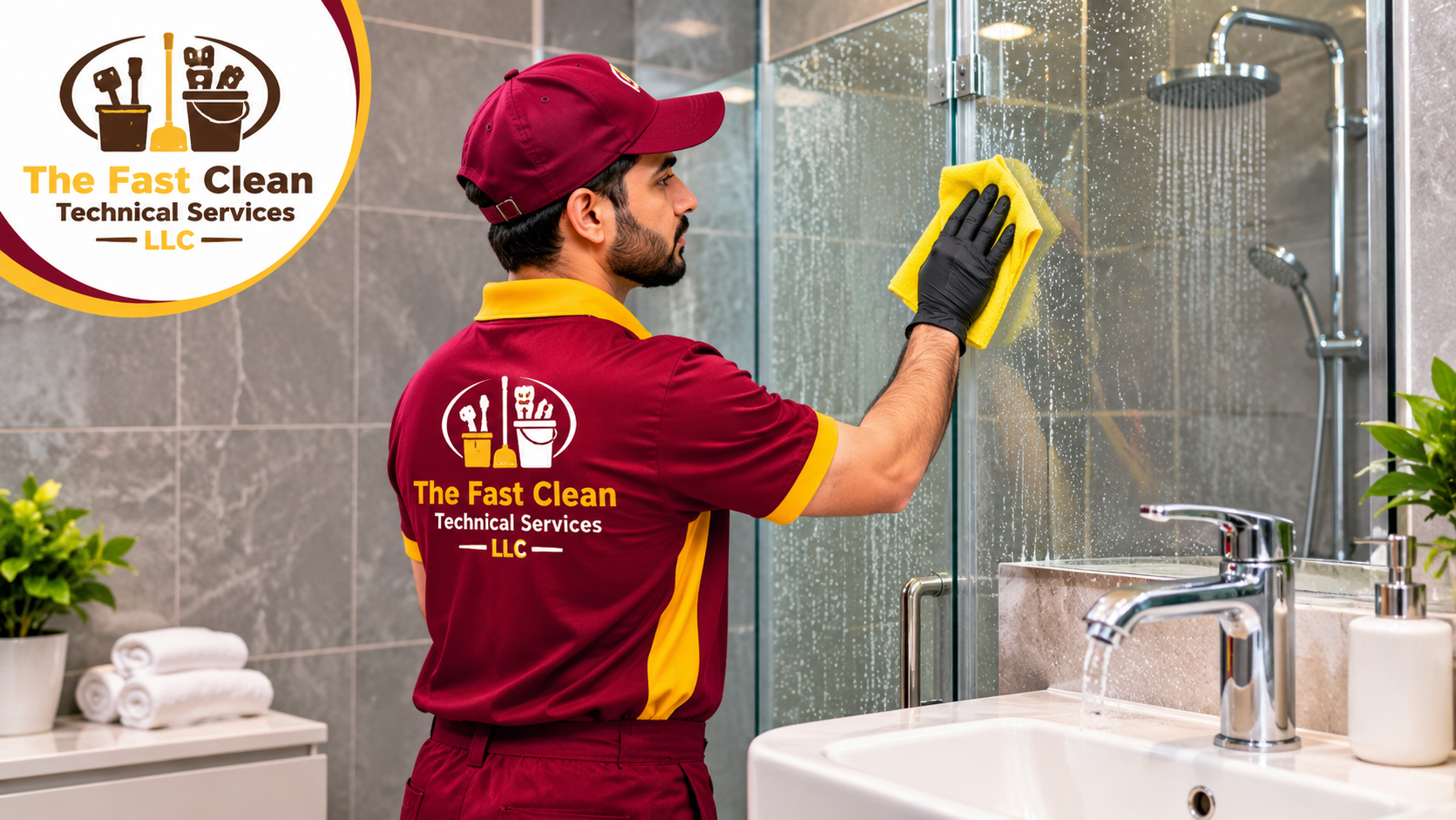
Shower glass is one of the most noticeable places for mineral deposits. White spots and cloudy marks can make transparent glass look dirty even after cleaning.
1Prepare the Glass Surface
Rinse the glass with clean water to remove loose dust, soap and surface dirt. This makes it easier to work on the mineral deposits.
2Choose a Suitable Cleaner
Use a glass-safe hard water stain remover according to its label instructions. For compatible glass surfaces, a diluted vinegar solution may help with light mineral deposits. Always test a small hidden area first.
3Clean with a Soft Cloth
Use a non-abrasive microfiber cloth or a suitable soft sponge. Gently work on the affected area without scratching the glass.
4Rinse and Dry
Rinse away the cleaning product thoroughly and dry the glass with a clean microfiber cloth or squeegee to reduce water marks.
How to Clean Bathroom Taps and Faucets
Bathroom taps often develop white mineral marks around their bases, handles and water outlets. These deposits can affect the appearance of otherwise clean fixtures.
- Wipe away loose dirt with a soft damp cloth.
- Apply a suitable cleaner for the tap's material and finish.
- Use a soft cloth to clean around handles and joints.
- Rinse the surface if the product instructions require it.
- Dry the tap to help prevent fresh water spots.
Be careful with chrome, brushed metal, gold-coloured and coated finishes. Strong acidic cleaners can damage some decorative surfaces.
How to Remove Mineral Deposits from Showerheads
Mineral deposits can collect around showerhead nozzles and reduce water flow. If the showerhead is removable, check the manufacturer's instructions before taking it apart.
- Inspect the showerhead for visible mineral deposits.
- Use a compatible descaling product as directed.
- Clean accessible nozzle areas gently with a soft brush.
- Rinse thoroughly before using the shower again.
- Check that the water flows normally after cleaning.
Avoid soaking delicate finishes or materials in acidic solutions unless the manufacturer confirms that it is safe.
Bathroom Tile and Soap Scum Cleaning
Bathroom tiles collect soap residue, body oils, dust and water deposits. Floor tiles may also accumulate dirt around edges and corners, particularly in frequently used bathrooms.
Steps for Cleaning Bathroom Tiles
- Remove loose dust and hair before wet cleaning.
- Apply a tile-compatible cleaning solution.
- Gently scrub affected areas using a soft or medium-bristle brush.
- Pay attention to corners and areas around bathroom fittings.
- Rinse away residue and dry where practical.
Always check whether the tile is ceramic, porcelain, natural stone or another material. Natural stone surfaces such as marble may be damaged by acidic cleaners, including vinegar.
How to Clean Bathroom Grout Lines
Grout lines between tiles can collect dirt, soap residue and moisture. Their porous nature can make them harder to clean than the tile surface itself.
- Use a grout-compatible cleaning product.
- Apply it according to the manufacturer's directions.
- Gently scrub with a suitable grout brush.
- Rinse the area thoroughly.
- Allow the surface to dry properly.
If grout is cracked, missing or persistently discoloured, cleaning alone may not solve the problem. Repair or professional assessment may be needed.
Cleaning Bathroom Sinks and Toilets
Sinks and toilets need regular cleaning because they are frequently touched and exposed to water, soap and everyday bathroom use.
Washbasin Cleaning
- Remove personal care products and loose items.
- Apply a cleaner suitable for the basin material.
- Clean the bowl, tap, drain area and surrounding surface.
- Rinse and wipe dry with a clean cloth.
Toilet Cleaning
- Apply a toilet cleaner according to its instructions.
- Clean the bowl using a dedicated toilet brush.
- Wipe the seat, lid, flush button and exterior surfaces.
- Use separate cleaning cloths for toilet areas.
- Wash your hands after completing the task.
Common Bathroom Deep Cleaning Mistakes to Avoid
Using the wrong product or cleaning tool can damage bathroom surfaces. Avoid these common mistakes during bathroom deep cleaning UAE routines:
- Using abrasive scrubbers on glass and polished fixtures.
- Applying acidic cleaners to marble or other sensitive stone.
- Leaving cleaning chemicals on surfaces longer than directed.
- Ignoring product instructions and material compatibility.
- Using the same cloth for toilets, sinks and other surfaces.
- Leaving wet surfaces without proper rinsing or drying.
How to Prevent Hard Water Stains in Your Bathroom
Preventive care can reduce the amount of mineral buildup and make regular cleaning easier. A few simple habits can help keep your bathroom looking cleaner between deep cleaning sessions.
- Use a squeegee on shower glass after bathing.
- Wipe taps and wet surfaces with a dry microfiber cloth.
- Keep bathroom ventilation working properly.
- Clean soap residue before it builds up.
- Check showerheads regularly for mineral deposits.
- Arrange periodic deep cleaning for difficult-to-reach areas.
When Should You Book Professional Bathroom Deep Cleaning UAE?
Regular household cleaning may be enough for everyday dirt, but some bathrooms need more detailed attention. Professional cleaning can be useful when hard water stains, soap scum and dirt have accumulated across several surfaces.
Consider arranging professional bathroom deep cleaning UAE when:
- Shower glass has persistent mineral deposits.
- Bathroom tiles have accumulated stubborn dirt.
- Grout lines need detailed cleaning.
- Fittings and corners are difficult to clean properly.
- You want a detailed cleaning before moving into a property or after renovation work.
The Fast Clean Technical Services LLC provides cleaning services for homes and properties in Dubai, Sharjah and Ajman. The cleaning requirements and scope can be discussed before arranging a service.
Frequently Asked Questions About Bathroom Deep Cleaning
1. How do I remove hard water stains from bathroom glass?
Use a glass-compatible hard water stain remover and a soft microfiber cloth. Follow the product instructions, rinse thoroughly and dry the glass to reduce new water marks.
2. Why do bathroom taps develop white stains?
White marks commonly form when water evaporates and leaves behind dissolved minerals such as calcium and magnesium.
3. Can vinegar remove hard water stains?
Diluted vinegar may help with light mineral deposits on compatible surfaces. However, avoid using it on marble, natural stone and finishes that are sensitive to acids.
4. How often should a bathroom be deep cleaned?
The frequency depends on household usage, ventilation, water deposits and the condition of the bathroom. Regular maintenance helps reduce the need for intensive cleaning.
5. How can I prevent hard water stains on shower glass?
Use a squeegee after showers and wipe the glass dry. Regularly removing water droplets helps reduce mineral deposits.
6. Does professional bathroom deep cleaning include grout cleaning?
Grout cleaning can be included depending on the agreed service scope. Confirm the required areas and cleaning requirements before booking.
Need Professional Bathroom Deep Cleaning in UAE?
Keep your bathroom cleaner with detailed cleaning support from The Fast Clean Technical Services LLC. Contact the team to discuss your bathroom cleaning requirements in Dubai, Sharjah or Ajman.
Visit The Fast Clean